Comparing VPN Protocols: OpenVPN vs IPSec, WireGuard, L2TP, and IKEv2
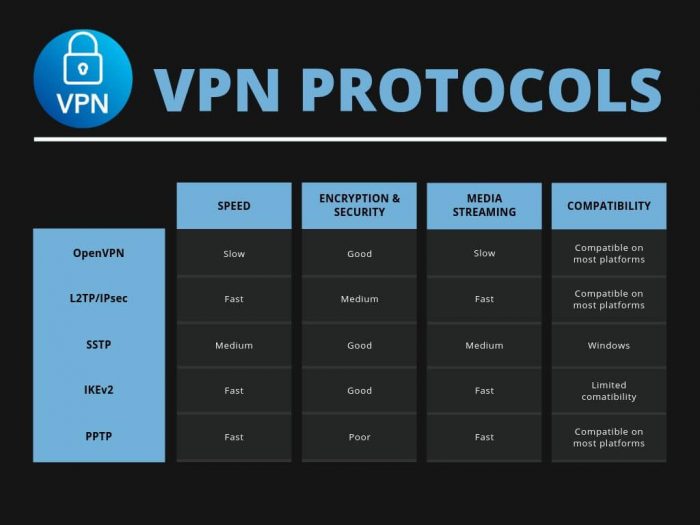
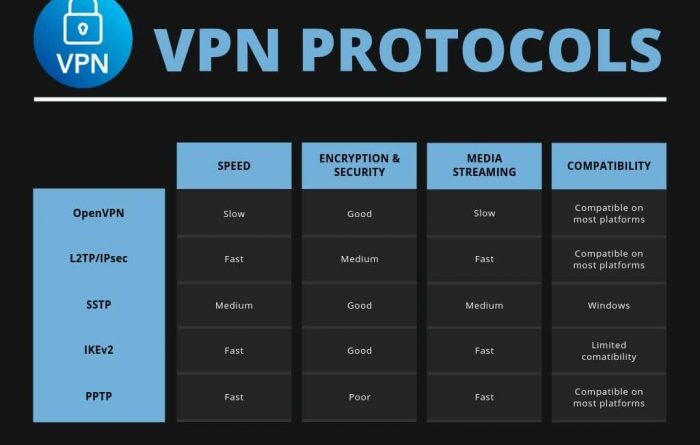
When it comes to choosing a VPN protocol, there are several options to consider. In this article, we will compare the most popular protocols: OpenVPN, IPSec, WireGuard, L2TP, and IKEv2. Each protocol has its own strengths and weaknesses, so it’s important to understand what each one offers and determine which one is best for your needs.
OpenVPN has been one of the biggest players in the VPN world. One of its biggest advantages is that it is an open-source protocol, meaning that anyone can review and audit the code. This provides a higher level of security, as vulnerabilities can be quickly identified and fixed. OpenVPN is also highly customizable and can be used on a wide range of operating systems, including Windows, Mac, Linux, and even mobile devices.
IPSec, on the other hand, is widely used and supported by most operating systems. It is a suite of protocols that offers both authentication and encryption. IPSec can be used in two different modes: transport mode, which only encrypts the data packets, and tunnel mode, which encrypts the entire data packet, including the original IP header. This makes IPSec a great option for site-to-site VPNs, where multiple networks need to be connected securely.
WireGuard is a relatively new VPN protocol that has gained popularity in recent years. It is known for its simplicity and efficiency, making it a great option for users who are looking for fast speeds and low resource usage. WireGuard is implemented entirely in the kernel space, which allows it to establish a VPN session with just a few lines of code. This means that it can be easily imported into different platforms and can be used on devices with limited resources, such as embedded systems or smartphones.
L2TP (Layer 2 Tunneling Protocol) is another popular VPN protocol. It is often used in combination with IPSec to provide a more secure connection. L2TP itself does not provide any encryption or authentication, but when used with IPSec, it can offer a high level of security. L2TP is supported by most operating systems and has built-in support in Windows, making it a convenient option for Windows users.
IKEv2 (Internet Key Exchange version 2) is a protocol that came as an improvement over its predecessor, IKEv1. It is often used in combination with IPSec to provide a secure and stable connection. IKEv2 is known for its ability to quickly re-establish connections after a network interruption, making it a great option for users who frequently switch between Wi-Fi networks or lose their connection. IKEv2 is also supported by most operating systems and is known for its speed and security.
In conclusion, when comparing VPN protocols, it’s important to consider your specific needs and requirements. OpenVPN offers high security and customization options, IPSec is widely supported and great for site-to-site connections, WireGuard is a fast and efficient option, L2TP is convenient for Windows users, and IKEv2 provides a stable and secure connection. Each protocol has its own advantages and disadvantages, so it’s important to choose the one that best aligns with your needs.
Understanding the different VPN protocols
When it comes to choosing a VPN protocol, there are several options available to users, each with its own strengths and weaknesses. It’s important to understand these protocols in order to make an informed decision about which one is best for your needs.
OpenVPN: OpenVPN is one of the most commonly used VPN protocols in the industry. It is an open-source protocol that provides a high level of security and is highly configurable. OpenVPN can be used with both TCP and UDP, although UDP is generally faster.
IPSec: IPSec is another commonly used VPN protocol that is widely supported by a number of VPN services, including ExpressVPN. It provides a stable and secure connection, although it is more complex to set up than OpenVPN.
WireGuard: WireGuard is a relatively new VPN protocol that aims to provide a simpler and more efficient way to establish secure connections. It uses state-of-the-art cryptographic methods and is designed to be fast and easy to use.
L2TP/IPSec: L2TP/IPSec is a combination of two protocols that is commonly used on older devices or in situations where other protocols may not be available. It provides a stable connection, although it is not as secure as OpenVPN or IPSec.
IKEv2: IKEv2 is a protocol that is commonly used on mobile devices. It is known for its ability to automatically re-establish a VPN connection if the network changes, making it ideal for users who frequently switch between Wi-Fi and cellular networks.
Each protocol has its own advantages and disadvantages, and the best choice will depend on your specific needs and preferences. Some protocols, like OpenVPN and IPSec, are more widely supported and provide a higher level of security. Others, like WireGuard and IKEv2, may be faster or easier to use. Ultimately, it is important to examine each protocol and understand its strengths and weaknesses in order to choose the one that is right for you.
OpenVPN: A versatile and highly secure option
OpenVPN is a widely used VPN protocol that offers versatility and exceptional security. Its open-source nature has allowed for continuous development and improvements over time, resulting in a reliable and feature-rich solution.
One of OpenVPN’s key advantages is its ability to work on multiple platforms, including Windows, Mac, Linux, and mobile operating systems. This cross-platform compatibility makes it convenient for users who switch between devices or operating systems.
OpenVPN is known for its strong encryption algorithms, which keep user data safe from potential risks and unauthorized access. It uses advanced encryption methods, such as the AES cipher, to ensure that data exchanged between the user’s device and the VPN server remains secure.
Additionally, OpenVPN utilizes the Transport Layer Security (TLS) protocol to authenticate and establish a secure connection between the user’s device and the VPN server. This ensures that the data transmitted over the network remains private and protected.
Another significant advantage of OpenVPN is its ability to bypass firewalls and other network restrictions. This is particularly useful in countries where VPNs are blocked or heavily regulated. OpenVPN’s ability to encapsulate VPN traffic within standard SSL/TLS protocols allows users to access blocked content and maintain their online privacy.
In terms of security, OpenVPN has undergone extensive security audits and is regularly updated to address any potential vulnerabilities. Its open-source nature and wide adoption have allowed the community to contribute to its security and stability. This makes OpenVPN one of the most trusted and secure VPN protocols available.
When choosing a VPN provider, it is essential to consider their implementation of OpenVPN. Some providers may use outdated or insecure versions of OpenVPN, which can pose risks to user privacy. It is recommended to select a provider that offers the latest and most secure version of OpenVPN.
In conclusion, OpenVPN is a reliable, highly secure, and versatile VPN protocol that is widely used and trusted by individuals and organizations around the world. Its open-source nature, strong encryption, and compatibility make it an excellent choice for those seeking a secure and private online experience.
IPSec: A widely used protocol for enterprise VPNs
IPSec is one of the most widely used VPN protocols, especially in enterprise settings. It is often used to connect remote offices or allow remote employees to securely access company resources. IPSec stands for Internet Protocol Security and it provides a secure and encrypted connection over the internet.
IPSec is often compared to other VPN protocols such as OpenVPN, WireGuard, L2TP, and IKEv2. While these protocols serve the same purpose of providing a secure connection, IPSec is often considered the more traditional and established option.
One advantage of IPSec is that it comes built-in with most operating systems, making it easier to set up without the need to install any additional software. It is already supported by many routers and firewalls, further simplifying the setup process.
When choosing a VPN provider, it is important to consider the type of support they offer for different protocols. Many providers support both IPSec and other protocols, allowing users to choose the one that best suits their needs.
It is worth noting that IPSec has some vulnerabilities and limitations. For example, it lacks the flexibility of other protocols when it comes to changing networks or IP addresses. Additionally, it may not work well with certain types of applications or on networks with strict firewall policies.
However, IPSec is still a great option for many use-cases, especially in enterprise environments. It is known for its reliability and security. The combination of IPSec with the IKEv2 key exchange protocol is often considered a strong choice for secure VPN connections.
In conclusion, IPSec is a common and trusted protocol for setting up VPNs, particularly in enterprise settings. It offers a secure and encrypted connection over the internet, and its compatibility with various systems and devices makes it a popular choice. While it may have some limitations, it remains a reliable option for many users.
WireGuard: A modern and efficient VPN protocol
WireGuard is a modern and efficient VPN protocol that is gaining popularity in recent years. It is designed to provide secure and fast communication in terms of network practices. Unlike other VPN protocols, WireGuard was primarily created to be easy to implement and use, with a focus on simplicity and efficiency.
One of the key features of WireGuard is its use of the HTTPS protocol. WireGuard relies on the Noise protocol framework for its cryptographic handshake and exchange, which ensures the integrity and confidentiality of data sent over the VPN connection.
Although WireGuard is a relatively new protocol, it has already gained significant popularity due to its performance and security advantages. It is expected to become a standard VPN protocol by the year 2022.
WireGuard encapsulates and encrypts data at the kernel level, allowing for faster and more efficient data transmission compared to older protocols like IPSec and L2TP. It is also known for its minimal codebase and simplicity, making it easier for developers to review and audit for security vulnerabilities.
WireGuard works on a variety of platforms, including Windows, Linux, macOS, Android, and iOS. It is widely regarded as one of the best VPN protocols for both client-to-server and site-to-site VPN setups.
One of the key advantages of WireGuard is its support for secure remote access. It establishes a private and secure session between the client device and the VPN server, ensuring that data transmitted is always encrypted and protected from unauthorized access.
WireGuard also provides excellent performance even in situations with high latency or unstable connections. It is particularly well-suited for use-cases where speed and efficiency are crucial, such as remote offices or high-bandwidth applications.
For users who prioritize privacy, WireGuard’s no-log policy is a significant advantage. The protocol does not collect or store any user-specific data, ensuring that users’ online activities are kept confidential.
In terms of security, WireGuard uses industry-standard cryptographic algorithms like Curve25519 for key exchange and AEAD algorithms like ChaCha20 and Poly1305 for data encryption and integrity. It also supports Perfect Forward Secrecy (PFS) for enhanced security.
Overall, WireGuard is a newer and more efficient VPN protocol that offers improved performance, simplicity, and security compared to older protocols like IPSec, L2TP, and IKEv2. Whether you are looking for a VPN for personal use or site-to-site connectivity, WireGuard is a solid choice that can meet your needs.
Which version of OpenVPN should you use: OpenVPN UDP vs OpenVPN TCP
When it comes to choosing the right version of OpenVPN, there are two main options to consider: OpenVPN UDP and OpenVPN TCP.
OpenVPN UDP: OpenVPN UDP is used primarily for speed and performs better in most cases. UDP stands for User Datagram Protocol, and it is a connectionless protocol that does not require acknowledgment of receipt. This means that data can be sent without waiting for a response, resulting in faster connections. However, UDP ports are more commonly blocked than TCP ports, so it is important to note that using OpenVPN UDP can sometimes lead to connection issues if firewalls or networks block the necessary ports.
OpenVPN TCP: OpenVPN TCP is a reliable option that ensures data integrity by establishing a connection before transmitting data. TCP stands for Transmission Control Protocol, and it guarantees that data packets are received in the same order as they were sent. This reliability comes at the cost of speed, as the acknowledgment process adds some latency. However, TCP ports are less likely to be blocked, making OpenVPN TCP a more stable choice in situations where network restrictions may be a concern.
Ultimately, choosing between OpenVPN UDP and OpenVPN TCP depends on your specific needs and circumstances. If you prioritize speed and are connected to a network that doesn’t block UDP ports, OpenVPN UDP may be the perfect choice for you. On the other hand, if network restrictions are a concern, or if you require a more stable connection for activities such as online gaming or streaming, OpenVPN TCP is a safer bet.
Understanding the differences between OpenVPN UDP and OpenVPN TCP
OpenVPN is one of the most popular open-source VPN protocols used by people around the world. It offers users the ability to establish secure connections over the internet, providing them with privacy and security. OpenVPN is available in two main versions: OpenVPN UDP and OpenVPN TCP.
OpenVPN UDP
OpenVPN UDP is the default and most widely used version of OpenVPN. It is known for its fast performance and low latency, making it a preferred choice for many users. UDP stands for User Datagram Protocol, which is a connectionless protocol that does not require acknowledgment from the receiving end. This means that data packets are sent without any guarantee of delivery, but it allows for faster transmission of data.
OpenVPN UDP is often used for activities that require real-time communication, such as streaming, gaming, and VoIP. However, it can be affected by network congestion and is more likely to be blocked by firewalls compared to OpenVPN TCP.
OpenVPN TCP
OpenVPN TCP is an alternative version of OpenVPN that uses the Transmission Control Protocol (TCP) for data transmission. TCP is a connection-oriented protocol that ensures reliable delivery of data packets. It guarantees that every packet is received and retransmits any lost packets.
OpenVPN TCP is a more reliable option, as it provides error-checking and congestion control. It is often used in situations where stability and data integrity are more important than performance, such as downloading large files and web browsing. However, because TCP has a higher overhead and additional data verification, it may result in slower speeds compared to OpenVPN UDP.
In terms of security, both OpenVPN UDP and OpenVPN TCP provide the same level of encryption. They use the OpenSSL encryption suite, which is a widely standardized encryption method in the industry. Additionally, both versions support various authentication methods, including certificates and usernames/passwords.
When choosing between OpenVPN UDP and OpenVPN TCP, it is important to consider your specific needs and priorities. OpenVPN UDP is often recommended for its fast performance and is the default choice for most providers. However, if stability and reliable data transmission are more important to you, then OpenVPN TCP might be the better option.
OpenVPN UDP: A faster option for streaming and gaming
When it comes to choosing a VPN protocol, OpenVPN UDP is a popular choice for those looking for a stable and high-performance connection. Unlike other protocols such as L2TP and PPTP, OpenVPN is not outdated and offers better security and stability.
One of the advantages of using OpenVPN UDP is its support for fast internet speeds, making it a great option for streaming and gaming. The UDP (User Datagram Protocol) version of OpenVPN allows for faster transmission of data, which is essential for activities that require real-time interaction like online gaming or streaming HD content.
OpenVPN UDP also offers strong data integrity and encryption, ensuring that your connection is secure and your data is protected. This makes it a reliable option, especially when compared to older protocols like PPTP, which have known weaknesses in terms of security.
Moreover, OpenVPN UDP is widely supported by VPN providers, including popular services like ExpressVPN. This means that you can easily find a VPN provider that uses this protocol, and have access to a large number of servers worldwide.
However, it’s important to understand that OpenVPN UDP may not be the best choice in every situation. For example, if you need to establish a site-to-site VPN connection or connect to a VPN server using a standard VPN client, another protocol like IKEv2/IPsec may be a better option.
In summary, OpenVPN UDP is a great choice for streaming and gaming due to its fast transmission speeds and strong security features. It is widely supported by VPN providers and offers a stable and reliable connection. However, it’s important to consider your specific needs and understand the limitations and advantages of other protocols before making a decision.
OpenVPN TCP: A reliable option for stability and network congestion management
When it comes to choosing a VPN protocol, OpenVPN TCP is a popular and reliable option. Unlike other protocols, OpenVPN is an open-source technology that provides a higher level of security with excellent stability and network congestion management.
OpenVPN TCP is widely used in both private and public networks because it offers a secure connection that guarantees confidentiality and integrity of data transferred over the network. The protocol uses the OpenSSL library, which has been audited extensively, making it an even more reliable choice.
One of the advantages of using OpenVPN TCP is its ability to handle network congestion effectively. By using a reliable and connection-oriented transport protocol like TCP, OpenVPN TCP can ensure that data packets are transmitted in a correct and orderly manner. This helps to prevent data loss and ensures a stable and uninterrupted connection, especially in situations where network conditions may be less than ideal.
While OpenVPN TCP offers a high level of stability and reliability, there are a few things to keep in mind. Since TCP is a connection-oriented protocol, it may not be the fastest option available. The protocol adds some overhead to the data packets, which can result in slightly slower speeds compared to other protocols like UDP. However, the advantages of reliability and network congestion management often outweigh the small decrease in speed.
In conclusion, OpenVPN TCP is a strong choice for those who prioritize stability, network congestion management, and the highest level of security. This protocol is widely used in both personal and professional settings, providing a secure and reliable connection that can be used securely in a variety of situations. Whether you are accessing private office networks or using public Wi-Fi, OpenVPN TCP can help you gain the utmost confidentiality and integrity for your data.
Choosing the right version of OpenVPN for your needs
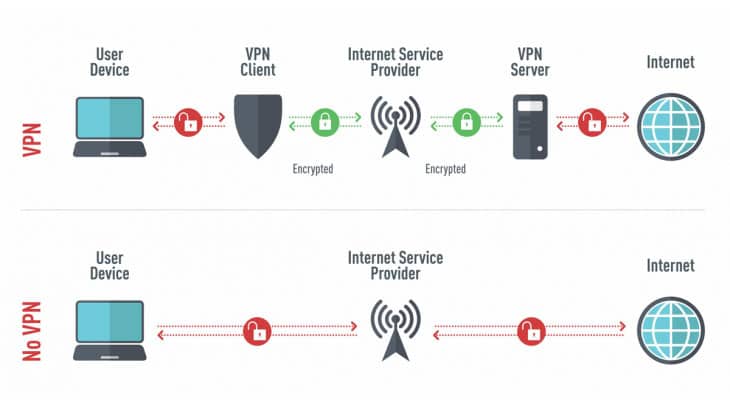
When it comes to selecting the right version of OpenVPN for your specific requirements, it is important to consider several factors. Firstly, the source and inherent strengths of OpenVPN make it a popular choice among VPN users. Secondly, the differences between the various versions of OpenVPN need to be understood in order to make an informed decision.
This article discusses the pros and cons of the different versions of OpenVPN, including the standard version, OpenVPN-Lite, and OpenVPN-UDP. It breaks down the strengths and weaknesses of each version and shows which one is best for various use cases.
One of the biggest advantages of OpenVPN is that it is widely supported across different platforms and devices, making it a versatile option. Additionally, OpenVPN provides end-to-end encryption for data packets, ensuring a secure connection between the user’s device and the VPN server.
In contrast, some weaknesses of OpenVPN include potential speed and performance issues, as well as the need for additional configuration in order to enable features such as split tunneling and port forwarding.
For those looking for advanced security features, OpenVPN-UDP, also known as OpenVPN over User Datagram Protocol, is a popular choice. This version offers better performance and faster speeds compared to the standard version of OpenVPN.
Another option to consider is WireGuard, a newer protocol that is gaining popularity in the industry. WireGuard stores and handles network interactions in a more efficient manner, resulting in improved speeds and lower latency.
In conclusion, when choosing the right version of OpenVPN, it is important to consider your specific needs, such as the level of security required, the speed and performance expectations, and any additional features that may be important to you. By understanding the strengths and weaknesses of each version, you can make an informed decision and select the version that best meets your requirements.
Comparing OpenVPN UDP and OpenVPN TCP in terms of security
When it comes to comparing the security of OpenVPN UDP and OpenVPN TCP, there are several important factors to consider.
The UDP Option
OpenVPN UDP is often preferred over TCP for its superior speed and efficiency. It is particularly useful for Wi-Fi users or those on unstable networks, as UDP does not wait for acknowledgments and can therefore offer a smoother and faster connection. However, the downside is that UDP may not be the best choice for those seeking a higher level of security.
The TCP Option
On the other hand, OpenVPN TCP offers a more reliable and secure connection. TCP is known for its ability to correct errors and ensure that data packets are delivered in the correct order. This makes it a suitable option for users who prioritize stability and security over speed. However, TCP can be slower than UDP due to its need for acknowledgment before sending additional data packets.
One of the main considerations when choosing between OpenVPN UDP and OpenVPN TCP is the level of security required. While UDP is faster, it may leave users more vulnerable to potential security breaches. TCP, on the other hand, provides a more secure connection but may be slower in terms of speed. Therefore, it is essential to weigh the options and choose the protocol that best aligns with individual needs and priorities.
The Impact on VPN Services
When it comes to VPN services, there are several popular providers that offer OpenVPN as one of their protocol options. For users seeking a free VPN, ProtonVPN is a reliable choice that supports both OpenVPN UDP and TCP protocols. ExpressVPN is another popular choice, offering OpenVPN TCP/UDP, L2TP/IPSec, and IKEv2 options.
Users should be aware of the security implications when using other, less secure, VPN protocols such as PPTP or L2TP/IPSec. While these protocols may be easier to set up, they are considered less secure due to vulnerabilities such as weak encryption (PPTP) or potential NSA involvement (L2TP/IPSec). Therefore, it is crucial to choose a VPN service that offers secure protocols like OpenVPN to ensure the safety and privacy of user data.
WireGuard and L2TP/IPSec
WireGuard, a new industry player gaining popularity in the VPN market, offers a lightweight and fast protocol. However, it is still in the early stages of development and may not offer the same level of security as more established protocols like OpenVPN TCP/UDP.
L2TP/IPSec, which stands for Layer 2 Tunneling Protocol over IPsec, is primarily used for site-to-site VPN implementations. While it is considered secure, it may face issues with firewall traversal and is not the recommended choice for individual users looking for anonymity or secure interactions.
The Massive Takeaways
Before choosing between OpenVPN UDP and OpenVPN TCP, it is essential to consider the needs and priorities of the user. While UDP provides faster speeds, TCP offers a more reliable and secure connection. Both protocols have their strengths and weaknesses, and users should select the one that aligns with their specific requirements.
Overall, OpenVPN remains one of the most secure and reputable VPN protocols available. Its powerful encryption and ability to keep user traffic anonymous make it a top choice for those seeking a secure and private online experience. Whether using OpenVPN UDP or OpenVPN TCP, users can have confidence in the implementation and performance of this widely used protocol.
Considerations for network compatibility and VPN configuration
When it comes to choosing a VPN protocol, there are several factors to consider. Network compatibility is one such consideration, as not all protocols may be compatible with your network infrastructure. For example, some older routers may not support newer protocols like WireGuard or IKEv2. It is important to check the compatibility of your network equipment with the desired protocols before making a decision.
Another consideration is the ease of configuration. Some protocols, like OpenVPN and IPSec, have free and open-source implementations that come with positive reviews from the VPN community. These implementations are often updated to address any security vulnerabilities that may arise. On the other hand, protocols like L2TP and IKEv2 are commonly used in remote access VPNs and might require specific client software or have limited configuration options.
In terms of speed and connection stability, OpenVPN and WireGuard are known for their industry-leading performance. While other protocols might offer enough speed for normal internet usage, they may not rely on the most efficient encryption algorithms. It is important to understand the specific needs of your VPN usage and compare the pros and cons of each protocol in that context.
If you are looking to set up a site-to-site VPN or an extranet-based VPN, protocols like IPSec and IKEv2 are commonly used and offer a variety of configuration options. These protocols are well-suited for larger organizations with multiple locations and complex network setups.
It is also important to consider the security strengths and potential risks associated with each protocol. For example, OpenVPN is known for its strong encryption and is generally considered secure. However, newer protocols like WireGuard are gaining popularity due to their simplified implementation and improved performance.
Finally, user-friendly clients and an intuitive user interface can greatly enhance the VPN experience. Providers like ProtonVPN and ExpressVPN offer excellent client software that is easy to use and provides a seamless connection experience. Reading online reviews and comparing different providers can help you find the VPN that best fits your needs.
Вопрос-ответ:
What are the main differences between OpenVPN and IPSec?
OpenVPN and IPSec are both VPN protocols used to secure internet connections, but they have some key differences. OpenVPN is an open-source protocol, meaning its code is available for anyone to view and modify. This allows for greater transparency and community auditing. IPSec, on the other hand, is a set of protocols and standards defined by the Internet Engineering Task Force (IETF). It is commonly used in corporate networks and is known for its strong security. OpenVPN is often praised for its high level of security and ability to bypass firewalls, while IPSec is known for its compatibility with different devices and operating systems.
How does WireGuard compare to OpenVPN in terms of speed?
WireGuard is a newer VPN protocol that is designed to be lightweight and efficient, offering faster speeds compared to OpenVPN. WireGuard operates at the kernel level, which allows it to take advantage of modern processor optimizations and reduce latency. OpenVPN, on the other hand, operates at the user level, which can introduce some overhead and impact performance. While OpenVPN is still a reliable and widely used protocol, if speed is a priority, many users are now turning to WireGuard for its faster and more streamlined performance.
Can L2TP be used with any encryption method?
Yes, L2TP (Layer 2 Tunneling Protocol) can be used with various encryption methods to secure the VPN connection. L2TP itself does not provide any encryption, and it is often paired with IPsec (L2TP/IPsec) to add a layer of security. L2TP/IPsec uses IPsec to encrypt the L2TP tunnel, providing confidentiality and integrity of the data being transmitted. Alternatively, L2TP can also be used with another encryption protocol like SSL/TLS to secure the connection. The choice of encryption method depends on the specific requirements and compatibility of the devices or VPN services being used.
What are the advantages of using IKEv2 over other VPN protocols?
IKEv2 (Internet Key Exchange version 2) has several advantages over other VPN protocols. Firstly, it is known for its fast and smooth reconnection capabilities, making it ideal for situations where the network connection may be unstable, such as when switching from Wi-Fi to mobile data. Additionally, IKEv2 supports built-in MOBIKE (Mobility and Multihoming Protocol) which allows devices to seamlessly switch between different network interfaces without interrupting the VPN connection. IKEv2 also has strong security features, including support for modern cryptographic algorithms and key exchange methods. Overall, IKEv2 provides a reliable and secure VPN experience.
Which VPN protocol is the most secure?
The security of a VPN protocol depends on various factors such as encryption algorithms used, key exchange methods, and implementation vulnerabilities. However, OpenVPN is often regarded as one of the most secure VPN protocols available. It uses the OpenSSL library, which provides strong encryption and authentication methods, including AES (Advanced Encryption Standard) and SHA (Secure Hash Algorithms). OpenVPN also has a robust security model that allows for the use of certificates and two-factor authentication. While other protocols like IPSec and WireGuard also offer strong security, OpenVPN’s extensive use and community scrutiny make it a popular choice for security-conscious users.
Can I use multiple VPN protocols at the same time?
Yes, it is possible to use multiple VPN protocols simultaneously by utilizing a VPN client or software that supports multiple protocols. For example, some VPN clients offer the option to switch between different protocols such as OpenVPN, IPSec, and WireGuard, allowing users to choose the protocol that best suits their needs. However, it is important to note that using multiple VPN protocols at the same time may introduce compatibility and performance issues. It is recommended to test and configure the VPN client properly to ensure that the desired protocols work together seamlessly.
Видео:
VPN protocollen uitgelegd : OpenVPN vs IKEv2/ IPSec, WireGuard, Shadowsocks, L2TP en PPTP!
VPN protocollen uitgelegd : OpenVPN vs IKEv2/ IPSec, WireGuard, Shadowsocks, L2TP en PPTP! by VPN Consult 1 year ago 9 minutes, 40 seconds 177 views
L2TP with IPSec vs Wireguard VPN Performance
L2TP with IPSec vs Wireguard VPN Performance by Netcraft 11 months ago 7 minutes, 53 seconds 1,235 views
