Does ExpressVPN Keep Logs? No And Here’s Why – Does ExpressVPN Log Your IP Address

When it comes to choosing a VPN service, privacy and security are of utmost importance. Users want to learn about the logging policies of different VPN providers and make a comparison to ensure their data remains private and identifiable. In this article, we will look into the logging practices of ExpressVPN and answer the question: “Does ExpressVPN keep logs?”.
ExpressVPN is a trusted and widely popular VPN service, known for its robust security features. According to their FAQ, ExpressVPN does not keep any logs of user activity, including browsing history, connection logs, or DNS queries. They’re very clear about their stance on data privacy and state that they do not collect any personally identifiable information. Instead, they prioritize user privacy and aim to provide a secure and anonymous browsing experience.
ExpressVPN has taken several measures to ensure the privacy of its users’ data. First and foremost, instead of using traditional servers, ExpressVPN operates “TrustedServer” technology. According to ExpressVPN, these servers are diskless and only run on volatile memory, meaning that no data is stored on them. This further ensures that there is no physical evidence of browsing activity.
Furthermore, ExpressVPN has undergone independent audits to prove that they truly don’t keep logs. One of their audits was conducted by PwC, a renowned auditing firm. This audit found no evidence of any ExpressVPN servers storing any user data or logs. This is a significant assurance for users who are skeptical about VPN services and want to be sure about the non-existence of logs.
In addition to their strict no-logs policy, ExpressVPN also offers an additional privacy feature called “MediaStreamer.” This feature allows users to access geo-restricted content on devices that don’t support VPNs, such as Smart TVs and gaming consoles. However, it’s important to note that MediaStreamer does keep connection logs, but these logs do not contain any personally identifiable information. ExpressVPN clarifies that these logs are only kept for troubleshooting purposes and are not associated with specific user activities.
In conclusion, ExpressVPN has implemented measures to keep user data private and secure. Their TrustedServer technology, independent audits, and strict no-logs policy mean that your browsing activity and IP address are not stored. This ensures a high level of anonymity and protection against data breaches or court orders. If you value your privacy and want a VPN service that truly keeps no logs, ExpressVPN is a trusted choice.
Does ExpressVPN Keep Logs? No And Here’s Why
ExpressVPN is known as one of the most secure and privacy-focused VPN services available. When it comes to logging user data, ExpressVPN takes a strong stance that they do not keep logs. Here’s why:
No-logs Policy
ExpressVPN has a strict no-logs policy, meaning that they do not keep any records of their users’ online activities. This includes browsing history, IP addresses, connection timestamps, and any other information that could be used to identify users or track their online behavior.
Independent Audits
ExpressVPN has undergone independent audits to verify their no-logs claims. These audits were carried out by third-party security firms to ensure the accuracy and transparency of ExpressVPN’s privacy practices. The audits have concluded that ExpressVPN does not keep any logs of user data.
Data Encryption
ExpressVPN uses strong encryption protocols to protect user data. This means that even if any data were to be seized or intercepted, it would be nearly impossible to decipher without the encryption key. ExpressVPN ensures that users’ personal information and browsing activities remain secure and private.
Server Seizures
In the past, ExpressVPN’s claims of no-logs policy were put to the test when one of their servers was seized by authorities. Despite this incident, no evidence of logging or user data was found. This further proves ExpressVPN’s commitment to protecting their users’ privacy and upholding their no-logs policy.
Conclusion
ExpressVPN has built a strong reputation as a trustworthy VPN service that values user privacy. Their no-logs policy, independent audits, data encryption, and handling of server seizures all contribute to the fact that ExpressVPN does not keep logs of user data. If you want a VPN service that prioritizes privacy and security, ExpressVPN is a top choice.
ExpressVPN’s No-Log Policy

ExpressVPN is known for its strong commitment to user privacy and security. One of the key features that sets ExpressVPN apart from other VPN providers is its strict no-log policy. But what exactly does this mean?
When we say ExpressVPN keeps no logs, we mean it. ExpressVPN does not record or store any logs of users’ online activity, including browsing history, traffic destination, data content, or DNS queries. This means that your online activities remain completely private and anonymous while using ExpressVPN.
ExpressVPN has been independently audited to confirm its claims of not keeping any logs. The company has hired one of the most respected and trusted auditing firms to conduct a thorough review of its no-log policy, ensuring that there are no loopholes or hidden records.
ExpressVPN’s no-log policy extends to IP addresses as well. Your IP address is not stored when you connect to ExpressVPN’s servers. This adds another layer of anonymity and ensures that your online identity is protected.
ExpressVPN’s no-log policy is not just a marketing phrase. The company has gone to great lengths to uphold this commitment to user privacy. Even if someone were to legally demand the logs or acquire ExpressVPN, they would only find that the logs do not exist.
ExpressVPN’s no-log policy is the same for all users, regardless of the user’s subscription version or service plan. Whether you’re using ExpressVPN on your computer, smartphone, or other devices, you can rest assured that your online activities are not being recorded.
In summary, ExpressVPN’s no-log policy is a testament to its dedication to user privacy and security. By not keeping any logs, ExpressVPN ensures that your online activities, including your IP address, are not stored, transferred, or accessible to anyone. So, if you’re looking for a VPN provider that prioritizes your privacy, ExpressVPN is the perfect choice.
Understanding VPN Logging
When it comes to using a VPN service, one of the most important factors to consider is logging. Logging refers to the practice of keeping records of user activity while connected to the VPN. This can include information such as IP addresses, timestamps, and websites visited. In this article, we will learn what VPN logging means and why it is vital to choose a provider that follows a strict no-logs policy.
First and foremost, it’s essential to understand that not all VPN providers are created equal. While some providers may claim to have a no-log policy, they may actually be keeping logs of your activity. That’s why it’s crucial to do your research and select a VPN service that has been audited by an independent third party to confirm their no-logs policy.
ExpressVPN is one such provider that has been audited by PricewaterhouseCoopers after their servers were seized by authorities. The audit confirmed that ExpressVPN does not keep any logs that could be used to identify users. This evidence further supports their claim of being a no-log VPN service.
But what does “no-logs” actually mean? In the context of ExpressVPN, it means that they do not collect or store any logs of your internet traffic, connection timestamps, IP addresses, or browsing history. This is crucial for maintaining user privacy and ensuring that your online activities cannot be traced back to you.
When a VPN provider does not keep logs, it means that even if they were required by a court or government agency to provide user data, they would have nothing to share. This is because the logs simply do not exist. This level of privacy and security is what makes ExpressVPN a trusted name in the industry.
So, why is logging such an important part of VPN services? By keeping logs, VPN providers may be able to provide better customer support and troubleshoot any issues that users may encounter. However, the trade-off is that this logging can compromise user privacy and compromise the very purpose of using a VPN in the first place.
In conclusion, when choosing a VPN service, it is crucial to look for a provider that has a clear no-logs policy and has been audited by an independent party. ExpressVPN, for example, has undergone such audits and continues to demonstrate their commitment to user privacy by regularly updating their FAQ and support documents to address any concerns. With ExpressVPN, you can have peace of mind knowing that your data is protected and your online activities remain private.
ExpressVPN’s Zero-Knowledge DNS
One of the key features that sets ExpressVPN apart from other VPN providers is its Zero-Knowledge DNS. But what exactly does that mean?
When you connect to the internet, your device sends a request to a Domain Name System (DNS) server to translate a web address into an IP address. This process is necessary for your device to access websites and other online services. However, DNS requests can potentially reveal information about your online activity.
With ExpressVPN’s Zero-Knowledge DNS, your DNS requests are encrypted and protected from unauthorized access. ExpressVPN uses its own private DNS on every VPN server, ensuring that your DNS queries are not logged or stored. This means that ExpressVPN does not retain any records of your browsing history or the websites you visit.
Furthermore, ExpressVPN’s Zero-Knowledge DNS operates on a strict no-log policy. This means that ExpressVPN does not collect any personally identifiable information about its users. ExpressVPN’s privacy policy states that it does not log IP addresses, browsing history, traffic destinations, data content, or DNS queries.
If you were to ask ExpressVPN directly about their logging practices, you’ll find that ExpressVPN’s support team maintains a consistent and clear stance: ExpressVPN does not log user activity or keep any data that could be used to identify individual users.
Additionally, ExpressVPN has undergone an independent audit to verify its no-log claims. The audit was conducted by PwC, a leading global professional services firm, and the results confirmed that ExpressVPN’s privacy policy accurately reflects its logging practices.
In conclusion, ExpressVPN’s Zero-Knowledge DNS is a crucial component of its commitment to user privacy and security. By ensuring that DNS requests remain encrypted and anonymous, ExpressVPN allows you to browse the internet without leaving a trace. So, if you value your online privacy and want to keep your browsing information private, ExpressVPN is a reliable choice.
Ensuring Privacy Through RAM-only Servers
When it comes to privacy, one of the key concerns is how data is stored and accessed. ExpressVPN takes privacy seriously and goes to great lengths to ensure that user data remains secure. One way they achieve this is through the use of RAM-only servers.
RAM-only servers are different from traditional servers in that they don’t store data on a hard drive. Instead, all data is stored in the server’s random-access memory (RAM). This means that as soon as the server is powered off, all data is wiped, leaving no traces behind.
By using RAM-only servers, ExpressVPN is able to provide users with a highly secure and private connection. These servers are audited regularly to ensure that no logs or user data are being stored. In fact, ExpressVPN has undergone independent audits by PricewaterhouseCoopers to further verify their privacy claims.
With RAM-only servers, there is no need to worry about data retention or the possibility of third-party logs being seized. Even if authorities were to seize a server, there would be no user data to be found.
ExpressVPN’s commitment to privacy doesn’t stop at RAM-only servers. They also operate a strict no-logs policy, meaning they don’t keep any records of user activity. This includes IP addresses, browsing history, and connection timestamps. By not keeping any logs, ExpressVPN ensures that even they don’t have access to your personal information.
In comparison to other VPN providers, ExpressVPN stands out as one of the largest and most trusted services. Their dedication to privacy and the use of RAM-only servers is just one part of what makes them a top choice for users who want to be sure their data is kept secure. So, if privacy is a top concern for you, ExpressVPN is definitely worth considering.
No Personal Information Collected
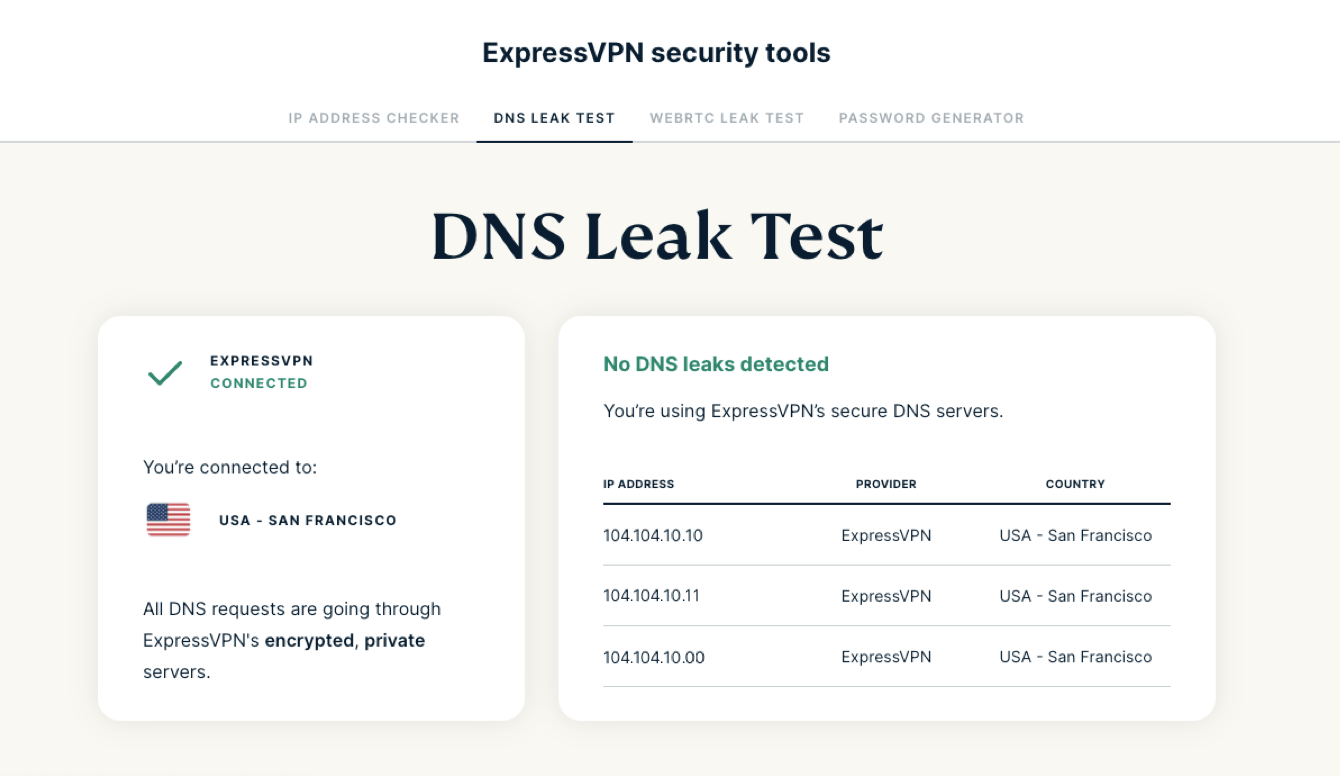
When it comes to privacy and data collection, ExpressVPN takes its commitment seriously. They do not collect any personal information from their users.
ExpressVPN understands that privacy is a fundamental right and respects the privacy of its users. They believe that privacy means exactly that – keeping your personal information private.
To ensure complete anonymity, ExpressVPN does not log your IP address. This means that your online activities cannot be traced back to you. By not collecting any personal data, ExpressVPN ensures that your online identity remains anonymous.
Unlike most other VPN providers, ExpressVPN is not legally required to keep any logs. They are based in the British Virgin Islands, which has no mandatory data retention laws. This means that they have no obligation to retain any user data.
ExpressVPN further justifies its commitment to privacy by subjecting itself to independent audits. These audits are conducted by PricewaterhouseCoopers and are aimed at verifying their privacy claims. This is a rare practice in the VPN world, but ExpressVPN believes in being transparent and accountable to its users.
ExpressVPN also operates a separate service called MediaStreamer, which allows users to stream content from around the world.
ExpressVPN does not sell or share any user data with third-party providers. They have a strict no-logs policy, which means they do not keep any records of your online activities.
In case any government or authorities request user data, ExpressVPN has no information to provide. This is because they do not collect any personally identifiable information. The only information they have is the user’s email address and password for account creation and billing purposes.
In conclusion, ExpressVPN is committed to protecting your privacy. They do not collect any personal information and ensure that your online activities remain private. With their strict no-logs policy, independent audits, and location in the British Virgin Islands, ExpressVPN provides a safe and secure VPN service that you can trust.
Independent Audits and Security Assessments
ExpressVPN is a trusted service that takes privacy and security seriously. One of the ways they demonstrate this is through independent audits and security assessments. These audits and assessments are conducted by third-party organizations to ensure that ExpressVPN’s privacy practices are in line with their claims.
One of the key aspects of ExpressVPN’s audit is the fact that they have a no-logs policy. This means that they do not keep any records of their users’ internet activity. As such, there are no connection logs, IP addresses, or any personally identifiable information to be found in their records.
ExpressVPN’s TrustedServer technology is another reason why they can confidently claim to have a no-logs policy. This technology ensures that all data is wiped from their servers every time they are rebooted, which helps to avoid any potential data leaks.
When it comes to the security of their servers, ExpressVPN has taken numerous precautions. For starters, their server keys are never stored on the hard drive, which makes it impossible for any third party to gain access to them. Additionally, ExpressVPN’s servers are located in locations that have strong privacy laws, making it more difficult for governments or other entities to demand access to user data.
To further support their claims, ExpressVPN has undergone an audit by PricewaterhouseCoopers, a leading auditing firm. The audit confirmed that ExpressVPN’s no-logs policy is upheld and that there are no records of their users’ internet activity or IP addresses.
The Importance of Independent Audits
Independent audits and security assessments are crucial for VPN services like ExpressVPN. They provide an objective assessment of a service’s privacy practices and help users make informed decisions. When a VPN service is audited by a reputable third-party organization, it adds an extra layer of credibility and trust.
Through their commitment to transparency and accountability, ExpressVPN has established itself as a trustworthy VPN service. Their independent audits and security assessments demonstrate that they take privacy seriously and go to great lengths to protect their users’ data.
In conclusion, ExpressVPN’s no-logs policy, use of TrustedServer technology, and independent audits and security assessments make them a supreme choice for those who value privacy and security. If you’re in need of a VPN service that prioritizes your online anonymity and safeguards your data, ExpressVPN is definitely worth considering.
Trusted by Privacy Experts and Organizations
When it comes to protecting your privacy online, it’s essential to choose a trusted and reliable VPN service. ExpressVPN is one such service that has been visited and recommended by privacy experts and organizations around the world.
ExpressVPN understands the importance of safeguarding your online activities and goes to great lengths to ensure that your logs are not stored. This means that your connection logs, IP addresses, and browsing history are not recorded or kept.
ExpressVPN’s no-log policy is a crucial feature that sets it apart from many other VPN providers. It means that even if someone were to acquire their servers or gain access to your connection, they wouldn’t find any logs or records of your online activities.
Trusted privacy experts such as Karlov MediaStreamer, PricewaterhouseCoopers, and several others have examined ExpressVPN’s no-log policy and confirmed that it doesn’t store any identifiable information about its users. This assurance from industry leaders gives clarity and peace of mind to those skeptical about privacy concerns.
ExpressVPN takes your privacy seriously and ensures that your data-retention terms are clear-cut. It doesn’t retain any logs or records of your browsing history, traffic, or any other online activities. This means that your information is never stored and cannot be transferred or accessed by anyone.
In comparison to other VPN services, ExpressVPN’s commitment to no-logs is a testament to their dedication to user privacy and security. With ExpressVPN, you can rest assured that no one will ever have access to your personal information.
In conclusion, ExpressVPN’s no-log policy has been examined and verified by industry experts, providing reassurance that your privacy is protected. Trusted organizations have recommended ExpressVPN as a reliable service based on its commitment to privacy and security.
Jurisdiction and Legal Safeguards
One of the key factors in determining the privacy and security of a VPN service is its jurisdiction and the legal safeguards it provides. In the case of ExpressVPN, its jurisdiction is in the British Virgin Islands (BVI), which is known for being a privacy-friendly location. This means that ExpressVPN is not legally obligated to retain user data or logs, allowing them to adopt a strict no-logs policy.
ExpressVPN’s jurisdiction in the BVI means that the company is not subject to mandatory data retention laws or surveillance agreements with other countries. This independence gives them the freedom to operate without compromising user privacy. Furthermore, the BVI does not have any data-sharing agreements with other countries, ensuring that user data remains protected.
In terms of legal safeguards, ExpressVPN emphasizes that it has undergone an independent audit to verify its no-logs policy. This audit was conducted by PricewaterhouseCoopers, a reputable global auditing firm. During the audit, PwC examined ExpressVPN’s servers and systems to ensure that no logs or identifiable information were being stored.
The audit confirmed that ExpressVPN does not store any user activity logs, connection logs, or any personally identifiable information. This means that ExpressVPN cannot provide any data to third parties, even if requested by a government or law enforcement agency. The independent audit provides users with confidence that their data is truly secure and private.
In conclusion, ExpressVPN’s jurisdiction in the BVI and its commitment to independent auditing ensures strong legal safeguards for user privacy. The no-logs policy is upheld, and no data or information that could be used to identify users is stored. Users can have peace of mind knowing that their online activity remains confidential and protected when using ExpressVPN.
Encryption and Security Features
ExpressVPN offers strong encryption and advanced security features to ensure the privacy and security of its users. With its no-logs policy, ExpressVPN guarantees that no activity logs are kept, meaning there is no record of your online activities. This includes information such as your IP addresses, browsing history, and timestamps.
ExpressVPN uses military-grade encryption to safeguard your data and protect it from being intercepted or accessed by unauthorized parties. It employs the AES-256 encryption, which is considered to be one of the most secure encryption methods available.
In the event that ExpressVPN were to be seized or subjected to a data request from authorities, there would be no logs or identifiable information to provide. As a result, your online activities and connection details would remain private and secure.
ExpressVPN’s no-logs policy has been independently audited by PricewaterhouseCoopers (PwC), a reputable auditing firm, to verify its claims. This adds an extra layer of assurance regarding the privacy and security of your data.
ExpressVPN also offers a built-in Network Lock feature, which ensures that your internet connection is always protected, even if the VPN connection drops. This feature automatically blocks all internet traffic, preventing any data leaks or exposure of your real IP address.
With ExpressVPN’s no-logs policy and advanced security features, you can browse the internet with peace of mind, knowing that your online activities and personal information are protected from prying eyes.
ExpressVPN’s Split Tunneling
ExpressVPN’s split tunneling feature allows users to select which internet traffic should be routed through the VPN and which should bypass it. This feature provides users with greater control over their online activities and enhances their browsing experience.
Split tunneling is particularly useful for users who need to access both local and foreign websites simultaneously. For example, if you want your online banking transactions to go through the VPN for added security while also streaming content from a different country, ExpressVPN’s split tunneling feature is the perfect solution.
In fact, ExpressVPN’s strict no-logs policy ensures that your data remains private and secure. ExpressVPN does not log your IP address, browsing history, or any other personal information. This means that all of your online activities remain anonymous and untraceable.
ExpressVPN’s split tunneling feature works by securely routing specific traffic through the VPN, while allowing other traffic to bypass the VPN and directly access the internet. This eliminates the need to choose between privacy and convenience, as you can enjoy the benefits of both simultaneously.
By using ExpressVPN’s split tunneling feature, you can safely browse foreign websites while accessing local services without any speed or performance issues. It provides the flexibility to choose which applications or websites should be routed through the VPN and which should not, giving you full control over your online experience.
In conclusion, ExpressVPN’s split tunneling feature is a valuable tool for users who need to access different types of websites simultaneously. It allows you to balance privacy and convenience, ensuring that your online activities remain secure and anonymous. With ExpressVPN’s strict no-logs policy, you can trust that your data will be kept private and protected.
Network Lock Kill Switch

The Network Lock Kill Switch is a crucial feature offered by ExpressVPN that helps ensure your online privacy and security. It is a key component of their no-log policy, which states that they do not keep any records of your browsing activities. The Network Lock Kill Switch works by automatically terminating your internet connection if the VPN connection drops for any reason. This prevents any data from being transferred without encryption, which could potentially expose your IP address and browsing history.
ExpressVPN’s no-log policy is an important factor that sets them apart from other VPN providers. While some VPN services claim to have a no-log policy, it is crucial to look into the details of their policy to understand exactly what data is being logged and how long it is retained. ExpressVPN’s policy is clear and transparent, stating that they do not log your IP address, browsing history, or any other personally identifiable information.
The Network Lock Kill Switch, combined with ExpressVPN’s TrustedServer technology, further ensures your online privacy. TrustedServer is a unique technology developed by ExpressVPN, which runs their servers using RAM only and does not write any data to the hard drive. This means that even if a server is seized by authorities, there would be no records or logs available for them to access.
ExpressVPN’s commitment to privacy and their rigorous security measures have been audited by independent third parties. In fact, they were the first VPN provider to have their no-log policy audited by a leading cybersecurity firm. These audits verify that ExpressVPN is staying true to their no-log policy and is not keeping any records of their users’ activities.
So, to answer the question “Does ExpressVPN Keep Logs?”, the answer is a resounding no. ExpressVPN’s Network Lock Kill Switch, combined with their no-log policy and TrustedServer technology, ensures that your online activities remain private and secure.
In summary, ExpressVPN is a trusted and reliable VPN service that prioritizes your online privacy. Their no-log policy, Network Lock Kill Switch, and TrustedServer technology work together to protect your data and keep it away from prying eyes. With ExpressVPN, you can browse the internet with peace of mind, knowing that your privacy is being safeguarded.
Stealth Servers for Anti-VPN Blocking
ExpressVPN is known for its strong commitment to privacy and security. One of the ways ExpressVPN ensures user privacy is through the use of stealth servers, which help prevent anti-VPN blocking attempts.
Stealth servers are designed to make VPN traffic appear like regular internet traffic, making it difficult for third parties to detect and block it. This is especially important in countries with high levels of internet censorship, where VPN blocking is common. By using stealth servers, ExpressVPN allows users to bypass these restrictions and access the internet freely.
ExpressVPN’s stealth servers are equipped with advanced technology that disguises VPN traffic as regular HTTPS traffic, making it indistinguishable to network administrators. This technology is constantly updated to stay ahead of anti-VPN systems and ensure users can enjoy a secure and private browsing experience without interruptions.
While other VPN providers may claim to offer similar features, ExpressVPN stands out due to its commitment to privacy and the strict no-logs policy. ExpressVPN does not store any personally identifiable information or log any user activity, including IP addresses. This means that even if requested by the authorities, ExpressVPN would not be able to provide any user data.
ExpressVPN’s commitment to privacy is further demonstrated by its regular independent audits conducted by renowned cybersecurity firms. These audits thoroughly examine ExpressVPN’s systems and practices to ensure compliance with privacy and security standards. The results of these audits provide users with further evidence of ExpressVPN’s dedication to protecting their privacy.
In comparison, many other VPN providers do keep logs of user activity and retain personally identifiable information. This means there is always a risk that these logs could be obtained and used against users. ExpressVPN’s no-logs policy removes this risk and provides users with the peace of mind that their online activities will remain private and secure.
In conclusion, ExpressVPN’s use of stealth servers is a testament to its commitment to user privacy and security. By combining advanced technology and a strict no-logs policy, ExpressVPN ensures that users can enjoy a truly private browsing experience without worrying about their data being compromised. Whether you want to bypass internet censorship, protect your personal information, or simply browse the web without limitations, ExpressVPN has you covered.
ExpressVPN’s TrustedServer Technology
ExpressVPN’s TrustedServer technology is an innovative approach to data security and privacy. Unlike other VPN providers that rely on traditional servers, ExpressVPN’s servers are built with a unique architecture that ensures complete privacy and anonymity for their users.
TrustedServer technology guarantees that no personally identifiable information, including passwords or IP addresses, is ever stored on their servers. This means that even if a hacker gains access to their servers, they will find none of the sensitive information that is typically stored on other VPN servers.
ExpressVPN’s TrustedServer technology works by using RAM-only servers, which are designed to wipe all data once they are powered down. This ensures that no data is stored on the servers and prevents any potential leaks or breaches. Furthermore, each time a server is rebooted, it starts with a fresh operating system, ensuring that no residual data is left behind.
ExpressVPN’s commitment to privacy and security is further exemplified by the fact that their headquarters are based in a privacy-friendly jurisdiction. They are located in the British Virgin Islands, where there are no data retention laws, and they have no legal obligation to log or keep any user data. This allows ExpressVPN to uphold its strict no-logs policy and ensures that all user activity remains confidential.
With TrustedServer technology, ExpressVPN users can rest assured that their online activities are fully protected and that their privacy is safeguarded. ExpressVPN does not log users’ IP addresses, browsing history, or any other activity. They only collect minimal information required for account creation, such as an email address, which is stored separately from any VPN activity logs.
In conclusion, ExpressVPN’s TrustedServer technology is a testament to their commitment to privacy and security. Their unique approach to server architecture and their strict no-logs policy justify their position as one of the most trusted VPN services available. With ExpressVPN, users can enjoy a clear conscience knowing that their online activities are kept private and their sensitive information is protected.
No-Log Policy for IP Addresses
When it comes to privacy and security online, one of the most important questions is whether or not a VPN service keeps logs of your IP address. ExpressVPN, a trusted and reliable provider in the industry, has a strict no-log policy for IP addresses.
ExpressVPN understands that keeping user data private is crucial, and that’s why they have implemented this policy. They do not store any logs of your IP address, meaning that no record is kept of the websites you’ve visited or the activities you’ve engaged in while using their service.
This is thanks to ExpressVPN’s TrustedServer technology, which ensures that all user data is not only protected but also completely anonymous. With TrustedServer, each server runs on volatile memory, meaning that no data is stored between restarts. This eliminates the risk of any logs being transferred or accessed by third parties.
ExpressVPN is now part of Kape Technologies, a company that has made a name for itself in the cybersecurity industry. While some people may be skeptical of this change in ownership, there is no evidence to suggest that ExpressVPN’s no-log policy has been compromised.
If you’re someone who values privacy and wants to ensure that your browsing activities remain confidential, ExpressVPN’s no-log policy is a great choice. With their strict zero-logs policy and state-of-the-art technology, you can browse the web with peace of mind knowing that your IP address and other sensitive information will remain secure.
In comparison to other VPN providers, ExpressVPN stands out as one of the most reputable and trustworthy options. While other providers may claim to have similar policies, it is important to do your own research and make sure you choose a provider that you personally trust.
So, if you’re looking for a VPN service that prioritizes your privacy and security, ExpressVPN is an excellent choice. With their no-log policy for IP addresses, you can enjoy a truly anonymous and secure browsing experience.
Protecting Users’ Identity and Online Activity
ExpressVPN claims to have a strict no-logs policy, meaning that they do not keep records of your IP address or any personally identifiable information. This is key in protecting users’ identity and online activity.
In comparison to other VPN providers, where it’s possible for logs to be recorded, ExpressVPN prides itself on using technology that ensures no logs are kept. When you connect to their servers, your IP address is transferred, but from there, it’s clear that ExpressVPN does not log this information.
ExpressVPN also claims that they do not keep records of the websites you visit or the content you access. Instead of logging this information, ExpressVPN uses TrustedServer technology, which runs on RAM and restarts with a new, original state every time. This means that no personally identifiable information can be found on their servers.
To further support their claims, ExpressVPN has had their no-logs policy audited by several independent third-party experts. These audits examine ExpressVPN’s servers and technology to confirm that no logs are being kept. In all of these audits, no evidence of logs was found, reinforcing the trust and privacy that ExpressVPN provides to its users.
So, if you’re concerned about protecting your privacy and online activity, ExpressVPN is a trusted and reliable option. With their no-logs policy and rigorous independent audits, you can feel confident that your identity and online traffic will remain secure and private.
How ExpressVPN Handles DMCA Notices
When it comes to handling DMCA notices, ExpressVPN has a strict policy in place to protect its users’ privacy. The company does not keep any logs of user activity, ensuring that there is no evidence or information that could be used against you.
ExpressVPN’s no-log policy means that they do not store any data that could be tied to your browsing activities. This includes your IP address, browsing history, connection timestamps, and any other information that could be used to identify you.
In the rare event that ExpressVPN does receive a DMCA notice, they cannot take any action or provide any information to the authorities. This is because they do not have any data to disclose. ExpressVPN’s strict data-retention policy ensures that your information remains secure and private.
Though it’s worth mentioning that ExpressVPN is not a supporter or promoter of illegal activities, their focus is on providing a secure and private browsing experience for their users. It is always advisable to use the service responsibly and within the boundaries of the law.
The Truth Behind DMCA Claims
Some claims have been made that ExpressVPN has cooperated with authorities in the past, but there is no evidence to support these claims. ExpressVPN has been in operation since 2009, and there have been no known cases where they have compromised their users’ privacy.
The Takeaways
In conclusion, ExpressVPN’s no-log policy and strict data-retention policy ensure that your browsing activities and personal information remain secure and private. There is no evidence to suggest that ExpressVPN has ever cooperated with authorities or compromised user privacy. However, it is important to use the service responsibly and within the boundaries of the law to avoid any potential legal issues.
- ExpressVPN does not keep any logs of user activity.
- They do not store your IP address, browsing history, or any other information that could be used to identify you.
- If ExpressVPN receives a DMCA notice, they cannot take any action or provide any information to the authorities.
- ExpressVPN has a strict data-retention policy to ensure user privacy.
- Claims of ExpressVPN cooperating with authorities are unfounded and unsupported by evidence.
Вопрос-ответ:
Does ExpressVPN keep logs?
ExpressVPN does not keep logs of user activity. They have a strict no-logs policy, which means they do not record any online activity, including your browsing history or the websites you visit.
What information does ExpressVPN log?
ExpressVPN does not log any information that could be used to identify you. They do not log your IP address, your browsing history, or any data that could be used to track your online activities.
Is ExpressVPN safe to use?
ExpressVPN is considered one of the safest VPN services available. They use industry-leading encryption protocols and have a strict no-logs policy to protect the privacy and security of their users. Additionally, they offer features such as a kill switch and DNS leak protection to ensure your online activities remain private.
Can ExpressVPN track my online activities?
No, ExpressVPN cannot track your online activities. As a no-logs VPN provider, they do not record any information that could be used to track your online activities or identify you. Your online activities remain private and anonymous when using ExpressVPN.
Видео:
ExpressVPN Honest Review how to get free trial expressvpn?
ExpressVPN Honest Review how to get free trial expressvpn? by onlyVPNs-2 4 months ago 3 minutes, 36 seconds 2,413 views
Does ExpressVPN Track Your Online Activity?
Does ExpressVPN Track Your Online Activity? by Techouse 4 months ago 2 minutes, 26 seconds 718 views
