Comparing the Best VPN Protocols: OpenVPN vs PPTP vs L2TP vs Others

When it comes to selecting a VPN protocol, choosing the right one can make a huge difference in the quality and security of your online experience. With so many options available, it can be overwhelming to decide which protocol is best for your specific needs. OpenVPN, PPTP, L2TP, and others are some of the most popular protocols used today. However, not all protocols are created equal.
First and foremost, PPTP (Point-to-Point Tunneling Protocol) is one of the oldest and most widely used protocols. While it is still a common choice due to its compatibility with older systems, it isn’t the most secure option available. In fact, PPTP has been found to have security vulnerabilities and is not recommended for users who prioritize privacy and security.
L2TP (Layer 2 Tunneling Protocol) is another widely used protocol that is known for its versatility and support on various platforms. It can be used with either IPSec or L2TP/IPSec for added security. While L2TP is considered more secure than PPTP, it can be slower due to the additional encryption it utilizes. Additionally, L2TP has been criticized for being susceptible to certain attacks.
OpenVPN is one of the most recommended protocols for those who prioritize security and privacy. It is an open-source protocol that uses SSL/TLS for encryption and has a built-in firewall. This makes it a solid choice for users who want to ensure their online activities are secure, regardless of where they are accessing the internet from. OpenVPN is also highly customizable and can be easily configured to work with different ports and protocols.
Another protocol worth considering is IKEv2/IPSec. It is known for its excellent performance and is commonly used on high-end VPN servers. IKEv2/IPSec supports mobility features, which means it can automatically reconnect in case of network or IP address changes. In addition, it can operate over UDP for faster speeds or TCP for better reliability. Overall, IKEv2/IPSec is a versatile and secure protocol that is perfect for users looking for a balance between speed and security.
In conclusion, when selecting a VPN protocol, there are several factors to consider. While PPTP and L2TP have their advantages and disadvantages, OpenVPN and IKEv2/IPSec are generally considered to be the most secure and reliable options. Depending on your specific needs, one of these protocols may be more suitable for you. Regardless of the protocol you choose, make sure to use a reputable VPN provider like NordVPN to ensure your online activities are protected and your privacy is maintained.
Comparing the Best VPN Protocols: OpenVPN vs PPTP vs L2TP vs Others
When it comes to VPN protocols, there are several options available, each with its own strengths and weaknesses. In this article, we will discuss the differences between OpenVPN, PPTP, L2TP, and other protocols, and help you decide which one is best for your needs.
L2TP/IPsec: A Contender Worth Considering
One of the most recommended protocols is L2TP/IPsec. L2TP stands for Layer 2 Tunneling Protocol, which allows for the creation of virtual private networks (VPNs) and is often used for accessing private networks remotely. The addition of IPsec, or Internet Protocol Security, provides improved security for data transmission.
What makes L2TP/IPsec a great contender is its simplicity and compatibility. It is supported by most operating systems and devices, including Windows, macOS, iOS, and Android. It also works well with most networks, making it a reliable choice for those who need to access their network while on the go.
OpenVPN: Beyond the Basics
OpenVPN is an open-source protocol that offers a high level of security and flexibility. It uses SSL/TLS encryption to secure data transmission and can operate over TCP or UDP. OpenVPN is known for its ability to handle multiple simultaneous connections and its support for advanced features like dynamic IP assignment and split tunneling.
One of the main advantages of OpenVPN is its ability to bypass firewalls and other network restrictions. With the help of SSL/TLS encryption, it can make your VPN traffic appear as regular HTTPS traffic, allowing you to access blocked websites and stream content without any issues.
PPTP: An Older Protocol with Some Limitations
PPTP, or Point-to-Point Tunneling Protocol, was one of the first VPN protocols introduced and is supported by most operating systems. Despite its ease of use and widespread compatibility, PPTP has some vulnerabilities and is considered less secure compared to other protocols.
PPTP is recommended for those who need a simple and easy-to-use VPN solution, but it may not be the best choice for users who value security and privacy. If you are concerned about the security of your data, it is recommended to use a more secure protocol like OpenVPN or L2TP/IPsec.
Conclusion: Choosing the Best VPN Protocol
Deciding on the best VPN protocol depends on your specific needs and priorities. If simplicity and compatibility are your main concerns, L2TP/IPsec is a recommended choice. If you require advanced features and the ability to bypass firewalls, OpenVPN is a great option. However, if you prioritize security and privacy, it is best to avoid PPTP and opt for a more secure protocol like OpenVPN.
No matter which protocol you choose, it is important to remember that using a VPN can significantly improve your online privacy and security. Whether you are accessing public Wi-Fi networks or streaming content, a reliable VPN protocol is essential to ensure that your data and activity remain safe and private.
Understanding Different VPN Protocols and Their Features
When it comes to choosing the best VPN protocol, there are several options available, each with its own set of features and benefits. In this article, we will discuss some of the newer protocols such as L2TP/IPsec, as well as other popular ones like OpenVPN, PPTP, and more.
L2TP/IPsec: Ideal for Customized and Secure Connections
L2TP/IPsec is a protocol that combines the best features of L2TP and IPsec, offering an ideal solution for secure and customized VPN connections. It provides high levels of security and supports multiple encryption algorithms, making it a popular choice for both individuals and businesses.
- The downside of L2TP/IPsec is that it can be slower than other protocols due to its double encapsulation approach.
- It also allegedly has some vulnerabilities, such as the possibility of small cracked backdoors in the protocol.
- However, L2TP/IPsec is still a secure option, and with the right configuration, it can provide fast and simple VPN connections.
One of the advantages of L2TP/IPsec is its compatibility with a wide range of platforms, including Windows, iOS, and Android. It also supports features like MOBIKE and IKEv2/IPsec, which further enhance its security and flexibility.
OpenVPN: The Best Open-Source Protocol with Strong Security
OpenVPN is often considered the best VPN protocol available, thanks to its open-source nature, high security levels, and flexibility. It offers better performance compared to older protocols like PPTP and L2TP/IPsec.
The open-source codebase of OpenVPN allows experts to review and audit the code for potential vulnerabilities, ensuring that there are no hidden backdoors or other security risks.
Moreover, OpenVPN supports various features like split tunneling, which helps users customize their VPN connections based on their specific needs.
The Verdict: Choose the Protocol That Best Fits Your Needs
When it comes to selecting the best VPN protocol, there is no one-size-fits-all solution. It depends on what you prioritize in terms of security, speed, and compatibility.
If you value security and customization, L2TP/IPsec might be the right choice for you. But if you want an open-source protocol with strong security features, OpenVPN is the way to go.
Ultimately, the best VPN protocol is the one that fits your specific requirements and helps you protect your online privacy and security. So, take the time to understand the different protocols and choose the one that suits you best.
OpenVPN – The Most Secure and Versatile Protocol
OpenVPN is a highly regarded protocol that is mostly used for securing dial-up and wireless connections. It is also commonly employed in high-end VPN services for its superior security and versatility compared to other protocols like PPTP and L2TP/IPsec.
One of the key advantages of OpenVPN is its ability to evade blocking and restrictions imposed by networks or ISPs. This makes it an ideal choice for accessing geo-restricted content, such as streaming services like Netflix, which often employ blocking measures to prevent users from accessing their content from certain regions.
When it comes to security, OpenVPN uses robust encryption algorithms to ensure the confidentiality and integrity of data transmitted over the network. It supports a variety of encryption ciphers, including AES-256-CBC and Chacha20, making it suitable for both high-end and low-end devices.
OpenVPN’s successor, WireGuard, is gaining popularity for its faster speed and improved performance. However, OpenVPN remains a highly secure and reliable protocol that is widely available on different platforms, including Windows, macOS, Linux, and mobile devices.
One of the greatest advantages of OpenVPN is its open-source nature, which allows security experts to audit its code for any security vulnerabilities or backdoors. This level of transparency ensures that your data is protected, and there are no hidden loopholes that could compromise your privacy.
In terms of speed, OpenVPN may not be the fastest protocol compared to its proprietary counterparts such as IKEv2/IPsec. However, with the right configuration and server selection, it can offer decent speeds for most users. Plus, its versatility and security outweigh any minor speed differences.
In conclusion, OpenVPN is considered one of the best VPN protocols available, making it a top choice for users who prioritize security, versatility, and transparency. Whether you’re accessing geo-restricted content, securing your online activities, or preventing censorship, OpenVPN offers a reliable and trusted solution for all your VPN needs.
PPTP – The Oldest and Least Secure VPN Protocol
PPTP (Point-to-Point Tunneling Protocol) is one of the oldest VPN protocols that has been widely used in the past. While it may still be supported by some VPN providers, it is considered obsolete and is no longer recommended for secure and private connections.
The main reason for PPTP’s lack of security is its use of weaker encryption algorithms compared to newer protocols. The so-called “MPPE” (Microsoft Point-to-Point Encryption) is the only encryption option available, and it uses low-level encryption methods that are not as secure as those offered by other protocols like OpenVPN.
Furthermore, PPTP has known vulnerabilities that make it susceptible to attacks, making it an easy target for hackers to intercept and decrypt the traffic. It is even possible for malicious actors to inject malicious code into the PPTP connection, leading to potential compromises of the user’s data.
Moreover, PPTP does not support strong authentication mechanisms and lacks built-in integrity checks, making it less reliable in terms of ensuring the authenticity and integrity of the transmitted data. This increases the risk of unauthorized access to the VPN connection, especially in situations where users might connect to unsecured or monitored networks.
In addition, PPTP can be easily blocked by firewalls and network administrators since it uses a fixed port (typically TCP port 1723) for its communication. Therefore, in cases where networks or countries enforce censorship or restrict VPN usage, PPTP might not be able to bypass such restrictions.
In summary, although PPTP may offer faster connection speeds due to its less demanding codebase, it falls short in terms of security and privacy capabilities. It is generally recommended to use more secure and modern protocols, such as OpenVPN or its successor WireGuard, for a safe VPN experience. These protocols provide superior encryption, support for stronger authentication methods, and have undergone extensive testing and auditing to reduce the chances of vulnerabilities.
L2TP – Combining the Best of Both OpenVPN and PPTP
L2TP (Layer 2 Tunneling Protocol) is a VPN protocol that combines the best features of both OpenVPN and PPTP. It goes beyond the capabilities of PPTP by providing more security features, making it ideal for secure connections.
Unlike PPTP, L2TP utilizes the IPsec protocol, which provides a more secure tunnel for data transmission. IPsec is known for its strong encryption algorithms, making it resistant to attacks and ensuring the confidentiality of data. Additionally, L2TP can be used in conjunction with other protocols like Mobike and IKEv2/IPsec, further enhancing its security features.
L2TP is widely used on Windows systems and is supported on most major operating systems. It is relatively easy to install and configure, making it popular among users. Although it may not be as quick as OpenVPN, it is still a popular choice for VPN connections.
One of the key advantages of L2TP is its compatibility with different types of networks. It can be used as a point-to-point tunnel or in a site-to-site setup. This flexibility allows users to bypass various network restrictions and connect to remote networks with ease.
In terms of security, L2TP offers high-end encryption standards, ensuring that your data is secure during transmission. It provides a secure tunnel that is resistant to attacks, offering peace of mind for users. Additionally, L2TP is one of the oldest VPN protocols and has been extensively tested and improved over the years.
In conclusion, L2TP combines the best features of both OpenVPN and PPTP, making it a perfect choice for users who prioritize security and simplicity. Its compatibility with different operating systems and network types further enhances its usability. Whether you’re looking for a quick and secure connection or a reliable way to bypass network restrictions, L2TP is sure to meet your needs.
Other VPN Protocols Worth Considering
While OpenVPN, PPTP, and L2TP/IPsec are some of the most popular and widely used VPN protocols, there are also other protocols worth considering. These protocols have been vetted and have unique features that may suit specific needs or preferences.
1. WireGuard
WireGuard is a relatively new VPN protocol that is gaining popularity due to its simplicity and speed. Unlike other protocols, WireGuard is not based on an open-source codebase, which means it has not been thoroughly audited like OpenVPN. However, it is considered to be one of the fastest and most secure VPN protocols available, making it a strong contender among other VPN types.
2. SoftEther VPN
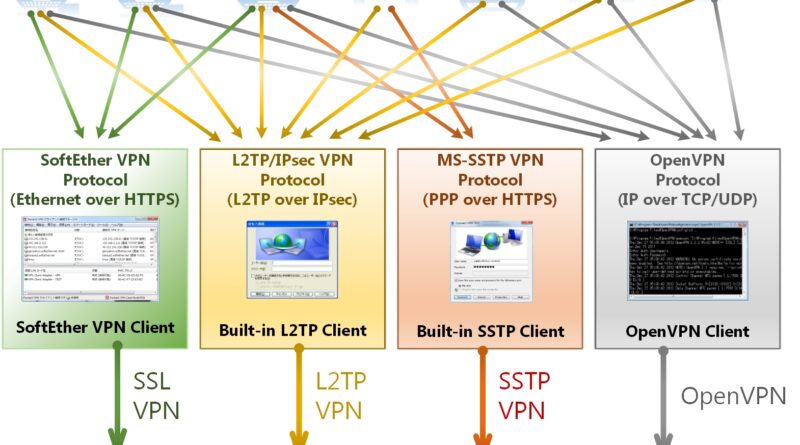
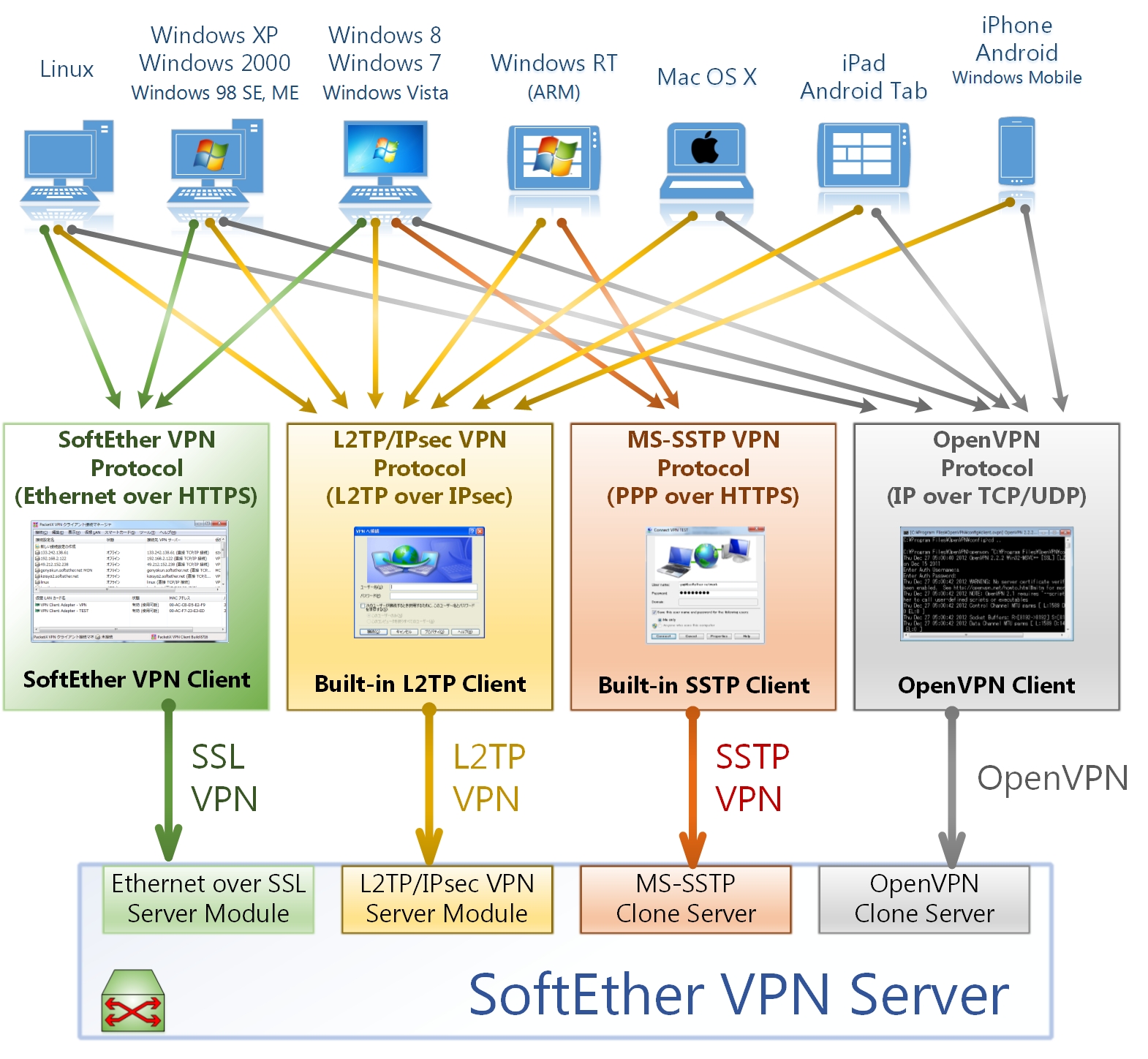
SoftEther VPN is an open-source protocol that supports a wide variety of operating systems. It utilizes multiple VPN protocols, including OpenVPN, L2TP/IPsec, and SSTP. SoftEther VPN can also forward OpenVPN and L2TP packets natively, making it a versatile option for users who require compatibility with multiple VPN clients and servers.
3. Shadowsocks
Shadowsocks is a VPN protocol that was specifically developed to bypass censorship in China. It utilizes the secure and fast ChaCha20 encryption algorithm and can be easily installed on a variety of devices and servers. While Shadowsocks is not as well-known as other protocols, it is a solid alternative for users who require a simple and efficient VPN solution.
4. IKEv2
IKEv2 is a successor to the older IPSec protocol and is widely supported by major operating systems and devices. One of the main benefits of IKEv2 is its ability to quickly reconnect to the server when a network connection is lost, making it ideal for mobile users. Despite its solid performance, however, IKEv2 has limited support for static IP addresses and can be more complex to configure than other protocols.
In conclusion, while OpenVPN, PPTP, and L2TP/IPsec are the oldest and most popular VPN protocols, there are other alternatives available. Each protocol has its own strengths and weaknesses, so it’s important to know what you’re looking for before making a decision. Whether you prioritize speed, security, or ease of use, there is a VPN protocol that will suit your personal needs.
L2TP/IPSec – The Successor of PPTP with Enhanced Security
L2TP/IPSec is often considered the successor to PPTP due to its enhanced security features and stability. When comparing the two protocols, it becomes apparent that PPTP hasn’t kept up with the evolving security standards. L2TP/IPSec, on the other hand, offers a more customized and secure solution.
To install and use L2TP/IPSec, you will need L2TP/IPSec client software installed on your device. While PPTP is relatively easy to install, L2TP/IPSec may require some additional steps. However, the added security and stability make it worth the effort.
L2TP/IPSec also provides a feature called reconnection, which ensures that if your connection drops, it will automatically reconnect without any intervention. This feature is especially useful for users who experience intermittent network connectivity.
One of the reasons why L2TP/IPSec is so popular is because it offers low-level encryption and security. It uses a combination of two protocols, L2TP for creating tunnels and IPSec for encryption, to provide a secure connection. Both protocols have been widely adopted and tested for security vulnerabilities, ensuring a robust and reliable solution.
Unlike PPTP, L2TP/IPSec doesn’t have any known backdoors or vulnerabilities that threaten the security of your data. It has become the protocol of choice for Android users, who often face security and privacy concerns.
When comparing L2TP/IPSec with other protocols, such as OpenVPN, IKEv2, and WireGuard, it stands out as a solid option. While OpenVPN is a popular and widely used protocol, L2TP/IPSec offers similar security levels with better performance. IKEv2 is another high-end protocol that is often compared to L2TP/IPSec, but it is considered to have slower speeds.
WireGuard, on the other hand, is a relatively new protocol that is gaining attention for its small codebase and high performance. However, it is not as widely supported as L2TP/IPSec, and its full potential is yet to be explored.
Overall, L2TP/IPSec is considered one of the best VPN protocols available, meeting the highest security standards while providing fast and reliable connections. Whether you’re using it for personal or business purposes, L2TP/IPSec is a trusted option that will keep your data safe and secure.
IKEv2 – Offering Fast and Stable Connections
When comparing the best VPN protocols, one option that stands out for its fast and stable connections is IKEv2. This protocol is highly recommended for users who prioritize speed and reliability in their VPN experience.
IKEv2, which stands for Internet Key Exchange version 2, is a VPN protocol that was introduced as an alternative to other protocols like OpenVPN and L2TP/IPsec. It is allegedly one of the most secure protocols available, using a combination of high-end encryption and authentication methods to protect your data.
One of the key advantages of IKEv2 is its ability to bypass network blocks and firewalls. This makes it an excellent choice for users who want to access specific websites or bypass censorship in their region. It also supports different types of networks, including mobile networks, making it suitable for users who frequently connect to public Wi-Fi networks.
IKEv2 is also known for its low latency, which means it offers fast and responsive connections. This is especially beneficial for activities that require low-latency connections, such as online gaming or video conferencing. Additionally, IKEv2 is an independent protocol, meaning it can establish and maintain connections without relying on other protocols such as OpenSSL.
One of the main features of IKEv2 is its ability to automatically reconnect in case of connection disruptions. This ensures that your VPN connection remains stable and secure even if there are temporary interruptions in your internet connection. It also supports seamless handoffs between different network types, allowing you to switch between Wi-Fi and cellular data without losing your VPN connection.
In summary, IKEv2 is an excellent option for users looking for fast and stable VPN connections. Its ability to bypass network blocks, low latency, and automatic reconnection make it a reliable choice for both personal and business use.
SSTP – A Secure VPN Protocol for Windows Users
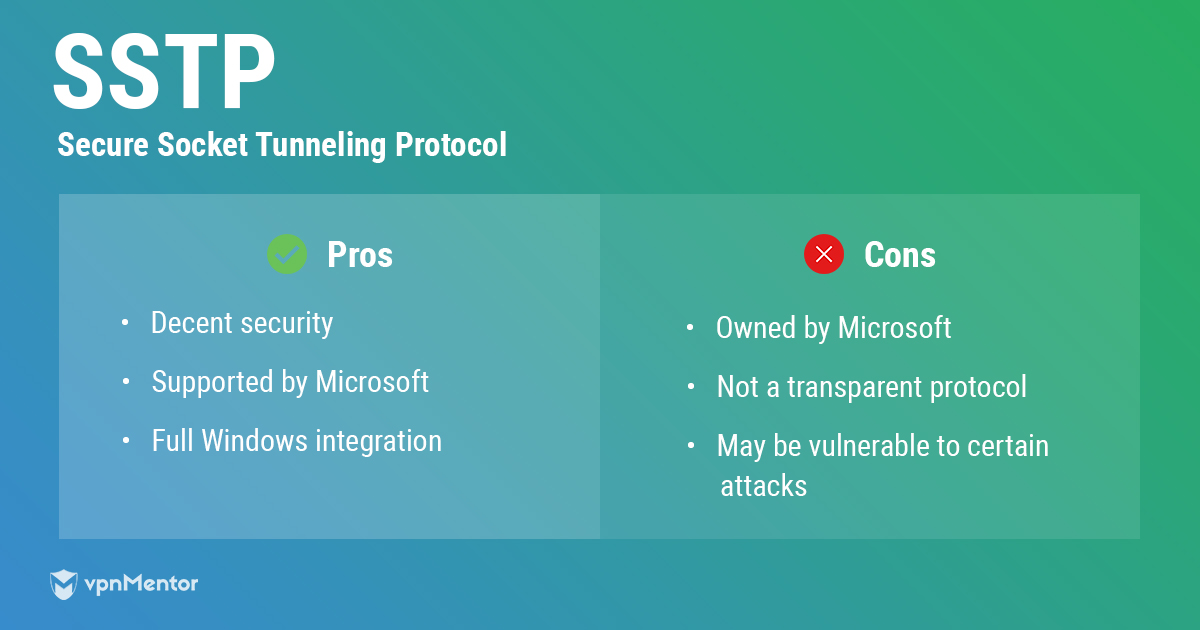
SSTP (Secure Socket Tunneling Protocol) is an excellent and incredibly secure VPN protocol that is specifically designed for Windows users. It offers a unique approach to VPN protection and is a wonder for those who want to maintain their online privacy and security.
One of the biggest advantages of SSTP is that it provides excellent protection no matter where you are. It can be used while traveling or accessing the internet from multiple locations, making it a great choice for users who are constantly on the go.
SSTP is the successor to PPTP and is specifically designed to overcome the weaknesses and vulnerabilities found in older protocols. While comparing SSTP to other VPN protocols like OpenVPN and L2TP/IPsec, it is clear that SSTP offers a higher level of security and is harder to crack.
One of the key features of SSTP is its ability to prevent blocking and allow users to implement VPN protection in regions where VPNs are heavily restricted. It is an excellent alternative to other VPN protocols that may be weakened or blocked.
SSTP is natively available on Windows and can also be used on Android devices. It provides a versatile solution for users who want to secure their identity and access streaming services without any issues.
In conclusion, SSTP is a secure and reliable VPN protocol that is perfect for Windows users. It offers everything you need, from excellent security to the ability to access streaming services and maintain your online privacy. SSTP is definitely worth considering among the many VPN protocols available.
WireGuard – A New, Lightweight, and Highly Secure VPN Protocol
Among the various VPN protocols available, WireGuard has emerged as a next-generation private network protocol. With its lightweight design and highly secure algorithms, it offers a better alternative to older protocols like PPTP, L2TP/IPsec, and OpenVPN.
WireGuard has gained popularity due to its simplicity and improved performance levels. It outperforms L2TP/IPsec and OpenVPN in terms of speed, making it a great option for accessing streaming services without experiencing slow connection speeds. Additionally, WireGuard is highly secure, meeting the highest encryption standards to ensure your data remains secure.
One of the advantages of WireGuard is its codebase, which is significantly smaller and more streamlined compared to other protocols. This makes it easier to audit and customize as per your specific needs. The open-source nature of WireGuard also ensures that its code is regularly updated and reviewed for any potential vulnerabilities.
WireGuard also offers a unique feature called “streamlined operation,” which allows it to bypass the network stack of the operating systems it runs on. This leads to faster and more efficient connections, particularly on mobile devices using iOS.
If you’re looking for a VPN protocol that combines simplicity, speed, and security, WireGuard is worth considering. Though it is relatively new, it has already gained widespread adoption and is supported by numerous VPN service providers. With WireGuard, you can be sure that your data is kept secure while enjoying fast and reliable connections.
Key Points about WireGuard:
- WireGuard is a new, lightweight, and highly secure VPN protocol.
- It outperforms older protocols like PPTP, L2TP/IPsec, and OpenVPN in terms of speed.
- WireGuard offers a streamlined codebase and is open-source, allowing for customization and regular updates.
- It includes a unique feature called “streamlined operation” for faster connections.
- WireGuard is gaining popularity and is supported by numerous VPN service providers.
In conclusion, WireGuard is a next-gen VPN protocol that provides a simple and quick way to establish secure connections. Its speed, security, and customizable code make it a strong contender against other popular VPN protocols.
SoftEther – An Open-Source VPN Protocol with Advanced Features
SoftEther is a small and simple open-source VPN protocol that offers advanced features beyond traditional protocols like PPTP and SSTP. It provides users with a versatile and quick way of creating secure tunnels for their data on a variety of platforms.
Having the Best of Both Worlds
SoftEther combines the strengths of other VPN protocols to create a powerful and flexible option for users. While PPTP is known for its speed and ease of use, it lacks security, which can be a major flag in today’s cyber landscape. On the other hand, L2TP/IPsec provides better security but can be challenging to set up and configure.
SoftEther tackles these weaknesses by incorporating advanced encryption algorithms, making it a recommended choice for users looking for a secure and user-friendly VPN solution. It supports multiple protocols like OpenVPN, L2TP/IPsec, and IKEv2/IPsec, which allows it to bypass widespread censorship and block issues that other protocols may encounter.
Ease of Use and Improved Performance
One of the key advantages of SoftEther is how easy it is to use. Users can make connections to SoftEther VPN servers with just a few clicks, making it a popular choice among individuals and organizations. It also offers improved performance compared to older protocols like PPTP and L2TP, which can be resource-intensive and prone to slow speeds.
SoftEther’s advanced features and support for a wide variety of platforms make it a great choice for users looking for a secure and reliable VPN protocol. Whether you’re working from home, traveling, or accessing sensitive information, SoftEther has the capabilities to meet your VPN needs.
Choosing the Best VPN Protocol for Your Needs
When it comes to selecting the best VPN protocol for your needs, there are several factors you should take into consideration. These factors include stability, security, compatibility, and performance. In this article, we will compare four of the most common VPN protocols: OpenVPN, PPTP, L2TP/IPsec, and SoftEther.
1. OpenVPN
OpenVPN is a widely used and highly regarded VPN protocol. It offers a high level of security, with strong encryption and authentication methods. OpenVPN is compatible with various operating systems, including Windows, Mac, and Linux. It provides excellent performance and stability, making it a popular choice for both personal and business use.
2. PPTP
PPTP (Point-to-Point Tunneling Protocol) is an older and less secure VPN protocol. It is supported by most operating systems, including Windows, but it lacks the encryption and authentication offered by other protocols. PPTP is often used for its simplicity and speed, but it should be avoided if security is a top priority.
3. L2TP/IPsec
L2TP/IPsec (Layer 2 Tunneling Protocol with IPsec) is a combination of two protocols that provide a high level of security. L2TP offers authentication and data encapsulation, while IPsec provides encryption. L2TP/IPsec is supported by most operating systems and is commonly used for secure remote access. It offers good stability and performance, although it may not be as fast as other protocols.
4. SoftEther
SoftEther is an open-source VPN protocol that offers a wide range of features and flexibility. It is compatible with various platforms and can be used to create both client-to-server and server-to-server connections. SoftEther provides good security and performance, making it suitable for both personal and enterprise use. However, it may require more technical expertise to set up and configure compared to other protocols.
When choosing the best VPN protocol, it is important to consider your specific needs and priorities. If security is your main concern, protocols like OpenVPN or L2TP/IPsec might be your best options. If you prioritize speed and simplicity, PPTP or SoftEther could be suitable choices. Ultimately, it is essential to choose a protocol that aligns with your unique requirements to ensure the best possible VPN experience.
Factors to Consider When Comparing VPN Protocols
When it comes to comparing VPN protocols, there are several important factors to take into consideration. These factors can help you determine which protocol is the most suitable for your needs and preferences.
1. Security:
One of the most important aspects to consider is the level of security provided by the VPN protocol. Some protocols, like OpenVPN and WireGuard, are known for their strong and reliable encryption, making them a safe choice for protecting your data.
2. Speed:
The speed of the VPN protocol is another crucial factor, especially for users who require fast and seamless performance. While some protocols may sacrifice speed for security, others, like L2TP/IPsec, offer a good balance between the two.
3. Compatibility:
Compatibility with different operating systems and devices is another essential consideration. Some protocols, such as OpenVPN and L2TP/IPsec, are widely supported on various systems, including Windows, Mac, and Linux.
4. Stability:
The stability of the VPN protocol is important to ensure a smooth and uninterrupted connection. Protocols like OpenVPN and L2TP/IPsec have proven to be reliable and stable options for both point-to-point and remote server connections.
5. Latency:
Latency, or the delay in data transmission, is a crucial factor for some users, especially for those who require real-time communication or gaming. Protocols like WireGuard have been specifically designed to minimize latency and provide a faster and more responsive connection.
6. Resource Usage:
The resource usage of the VPN protocol is another factor to consider, especially for users with limited system resources. Protocols like SoftEther can be resource-intensive and may not be suitable for older or less powerful devices.
7. Ease of Use:
The ease of use of the VPN protocol is an important consideration for users who are not tech-savvy. Protocols like OpenVPN can be more difficult to set up and configure compared to others, such as PPTP or L2TP/IPsec, which offer simpler options.
8. Open-Source:
For users who value open-source software, protocols like OpenVPN and WireGuard can be a preferred choice. These protocols allow for more transparency and community scrutiny, ensuring a higher level of security and reliability.
9. Specific Needs:
Depending on your specific needs, certain protocols may be more suitable than others. For example, if you require easy access to blocked websites or content, protocols like OpenVPN or SoftEther offer more options and flexibility.
10. Verdict:
In conclusion, while newer protocols like WireGuard offer improved speed and security, older protocols like L2TP/IPsec and OpenVPN still remain popular and widely used. It is important to consider your specific requirements and choose a protocol that provides the best balance between security, speed, and compatibility for your needs.
Security Level
When it comes to the security level, L2TP/IPsec is considered to be a good option. It provides a higher level of security as compared to PPTP while still providing a good balance between security and performance. The L2TP/IPsec protocol uses strong encryption algorithms and secure key exchanges to ensure that your data is protected from unauthorized access. This makes it a popular choice for businesses and individuals who are concerned about their online privacy.
However, it’s important to note that L2TP/IPsec is not without its vulnerabilities. Some security experts argue that the protocol has been weakened by the NSA and that it may not be as secure as initially thought. Additionally, L2TP/IPsec uses a combination of two protocols, which can make it more complex to set up and configure properly compared to other protocols.
OpenVPN, on the other hand, is known for its high level of security. It uses OpenSSL library and SSLv3/TLSv1 protocols for encryption and authentication. OpenVPN is very flexible and allows users to configure various security settings to meet their specific needs. The fact that it is open source also means that it has been extensively reviewed and audited for security issues by the community.
Overall, both L2TP/IPsec and OpenVPN offer solid security options for VPN users. The choice between the two will depend on your specific needs and preferences. If you are looking for a protocol that is easy to set up and configure, and is supported by most operating systems and devices, L2TP/IPsec may be the better option. If you prioritize security and are willing to invest some time in configuring and setting up OpenVPN, it may be the more attractive choice.
Speed and Performance
When comparing the speed and performance of different VPN protocols, it is important to consider factors such as data encryption and the efficiency of data transfer. In this regard, OpenVPN is widely regarded as one of the fastest and most reliable protocols available.
OpenVPN uses the OpenSSL library, which provides strong encryption while still maintaining good performance. It also supports a wide variety of encryption algorithms, including AES-256, which is considered one of the most secure options available.
L2TP/IPsec, on the other hand, can be a bit slower due to the additional overhead of the IPsec protocol. However, it is still a viable option for users who prioritize security over speed.
PPTP, which used to be a popular choice due to its simplicity and high speed, has fallen out of favor in recent years. It is known to have several security vulnerabilities, and its encryption is considered to be outdated and easily compromised.
Another protocol worth mentioning is WireGuard. While it is a relatively new technology, it has shown great potential in terms of speed and performance. WireGuard is designed to be fast and efficient, and it aims to provide better performance than traditional VPN protocols. It also has a smaller codebase, which makes it easier to maintain and audit for potential security flaws.
In summary, when it comes to speed and performance, OpenVPN is the recommended choice due to its strong encryption and efficient data transfer. L2TP/IPsec is a viable option for users who prioritize security, even though it may be slower. PPTP should be avoided due to its security vulnerabilities, and WireGuard offers a promising alternative that is fast and efficient.
Compatibility and Platform Support
When choosing a VPN protocol, it is important to consider the compatibility and platform support of each option. Different protocols have varying levels of compatibility across different devices and operating systems.
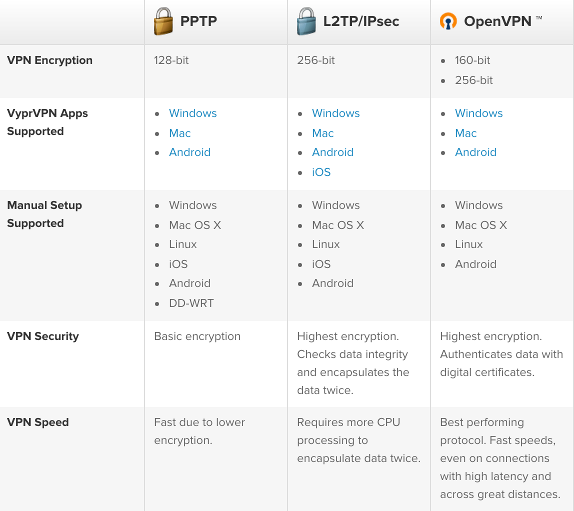
OpenVPN is highly compatible and supports a wide range of platforms, including Windows, macOS, Linux, Android, and iOS. It can be used on desktops, laptops, smartphones, and tablets, making it a versatile option that works across multiple devices.
PPTP, on the other hand, is an older protocol that is not recommended for modern use. It is compatible with Windows, macOS, Linux, Android, and iOS, but its support for newer platforms is limited.
L2TP/IPsec is compatible with a wide range of platforms, including Windows, macOS, Linux, Android, and iOS. However, it may require additional configuration and is not as easy to set up as OpenVPN.
What’s important to note is that each protocol uses different ports to establish a connection. OpenVPN typically uses port 1194 or 443, depending on whether it’s using TCP or UDP. PPTP uses port 1723, and L2TP/IPsec uses port 500.
Before choosing a VPN protocol, it’s important to ensure that the devices and platforms you plan on using are supported. Some protocols, such as OpenVPN, may require the installation of additional software or apps, while others may work natively on the platform.
In conclusion, consider the compatibility and platform support of a VPN protocol before making a decision. OpenVPN is a versatile option that works across different devices and platforms, while PPTP may be too obsolete for modern use. L2TP/IPsec is compatible with various platforms, but it may require additional configuration. Choose a protocol that aligns with your specific needs and the devices you plan on using.
Ease of Use and Configuration
When it comes to ease of use and configuration, the L2TP/IPsec protocol is incredibly user-friendly and straightforward, making it a popular choice among Windows users. Although the initial setup process may be slightly more complex than with other protocols, accessing L2TP/IPsec can be done through a built-in feature called “VPN client” on Windows.
This process involves configuring a username and password, as well as specifying the server address and port number. Once you have entered this information, you can easily connect to the VPN server and start browsing the web securely.
Unlike some other protocols, the L2TP/IPsec protocol does not require users to install any additional software or applications. Instead, it uses the existing infrastructure of the operating system to establish a secure tunnel between the user’s device and the VPN server.
In terms of speed, L2TP/IPsec may not be the fastest protocol available. Its encryption process can be resource-intensive, potentially slowing down internet connection speeds. However, this trade-off between speed and security is a common characteristic of most VPN protocols.
One of the main advantages of L2TP/IPsec is its widespread support across different operating systems and devices. It is compatible with Windows, macOS, iOS, Android, and others, making it an accessible choice for users across various platforms.
The stability of L2TP/IPsec is another factor that makes it a reliable option for VPN users. The protocol has been around for quite some time and has proven its effectiveness in securing online connections.
However, it is worth noting that L2TP/IPsec has some weaknesses. Due to its age, it may not be as secure as newer protocols like OpenVPN. L2TP/IPsec has also been subject to vulnerabilities such as the possibility of being hacked by determined attackers.
In conclusion, while L2TP/IPsec may not be the fastest or most secure VPN protocol, it offers a user-friendly and widely supported option for those looking for a balance between ease of use and security. It is particularly suitable for Windows users, but it can also be used on other operating systems. Before making a decision, it’s important to consider your specific needs and priorities in terms of speed, security, and compatibility.
Stability and Reliability
When it comes to stability and reliability, the L2TP/IPsec protocol stands as a strong contender. It is widely supported by various platforms and operating systems, making it an efficient and easy-to-use option for users. L2TP/IPsec is known for its ultra-fast speeds, making it ideal for streaming and other bandwidth-intensive operations.
The L2TP/IPsec protocol can be easily configured on a multitude of devices, including Windows, macOS, iOS, and Android. This simplicity makes it a popular choice among users who want a straightforward setup process.
Although the L2TP/IPsec protocol may not have the same level of security as newer protocols like OpenVPN, it still offers a high level of encryption to protect user data. L2TP/IPsec uses a combination of encryption algorithms, such as AES, 3DES, and Blowfish, to ensure secure data transmission.
One of the downsides of the L2TP/IPsec protocol is its susceptibility to potential attacks due to the use of outdated ciphers. While it is generally secure, older ciphers used by L2TP/IPsec have been cracked in the past. However, with proper configuration and regular updates, the protocol can still provide a reliable and secure connection.
In conclusion, L2TP/IPsec is a stable and reliable VPN protocol that is widely supported and easy to configure. While it may not offer the same level of security as newer protocols, it is still a viable option for users who prioritize speed and simplicity. By staying updated with the latest security standards and using strong encryption ciphers, users can benefit from the stability and reliability of the L2TP/IPsec protocol.
Вопрос-ответ:
What is OpenVPN?
OpenVPN is an open-source VPN protocol that uses SSL/TLS encryption to secure data transmission. It is known for its strong security features and support for various platforms.
Is OpenVPN compatible with all devices?
Yes, OpenVPN is compatible with most major operating systems, including Windows, macOS, Linux, iOS, and Android.
What are the advantages of using OpenVPN?
One of the main advantages of using OpenVPN is its strong security. It uses AES encryption, which is considered to be very secure. OpenVPN also supports various authentication methods and can bypass firewalls and other network restrictions.
What is the main disadvantage of OpenVPN?
The main disadvantage of OpenVPN is that it can be slower compared to other VPN protocols due to the overhead of encryption. However, this can be mitigated by using hardware acceleration or optimizing the server configuration.
What is L2TP/IPsec?
L2TP/IPsec is a VPN protocol that combines the best features of L2TP (Layer 2 Tunneling Protocol) and IPsec (Internet Protocol Security). It provides a high level of security and is widely supported by devices and operating systems.
Is L2TP/IPsec secure?
L2TP/IPsec is generally considered to be secure, as it uses strong encryption algorithms such as AES. However, it is worth noting that there have been some vulnerabilities discovered in the past, so it is important to keep the protocol up to date and use strong passwords.
What are the advantages of using L2TP/IPsec?
L2TP/IPsec provides a good balance between security and performance. It is widely supported by devices and operating systems, making it easy to set up and use. L2TP/IPsec also has built-in NAT traversal capabilities, which allows it to bypass firewalls and other network restrictions.
Видео:
What is the difference between PPTP, L2TP/IPsec, SSTP, IKEv2, and OpenVPN?
What is the difference between PPTP, L2TP/IPsec, SSTP, IKEv2, and OpenVPN? by Tom Spark’s Reviews 5 years ago 5 minutes, 53 seconds 24,122 views
What is Wireguard? A "New" VPN Protocol + How it Compares to OpenVPN
What is Wireguard? A "New" VPN Protocol + How it Compares to OpenVPN by All Things Secured 3 years ago 4 minutes, 9 seconds 73,984 views
WireGuard vs OpenVPN vs IPSec IKEv2 – What is the best?
WireGuard vs OpenVPN vs IPSec IKEv2 – What is the best? by Raspberry Pi Cloud 1 year ago 17 minutes 27,604 views
